
Our Communities:
Sarina Jain – Celebrating Joy and Fitness through Masala Bhangra
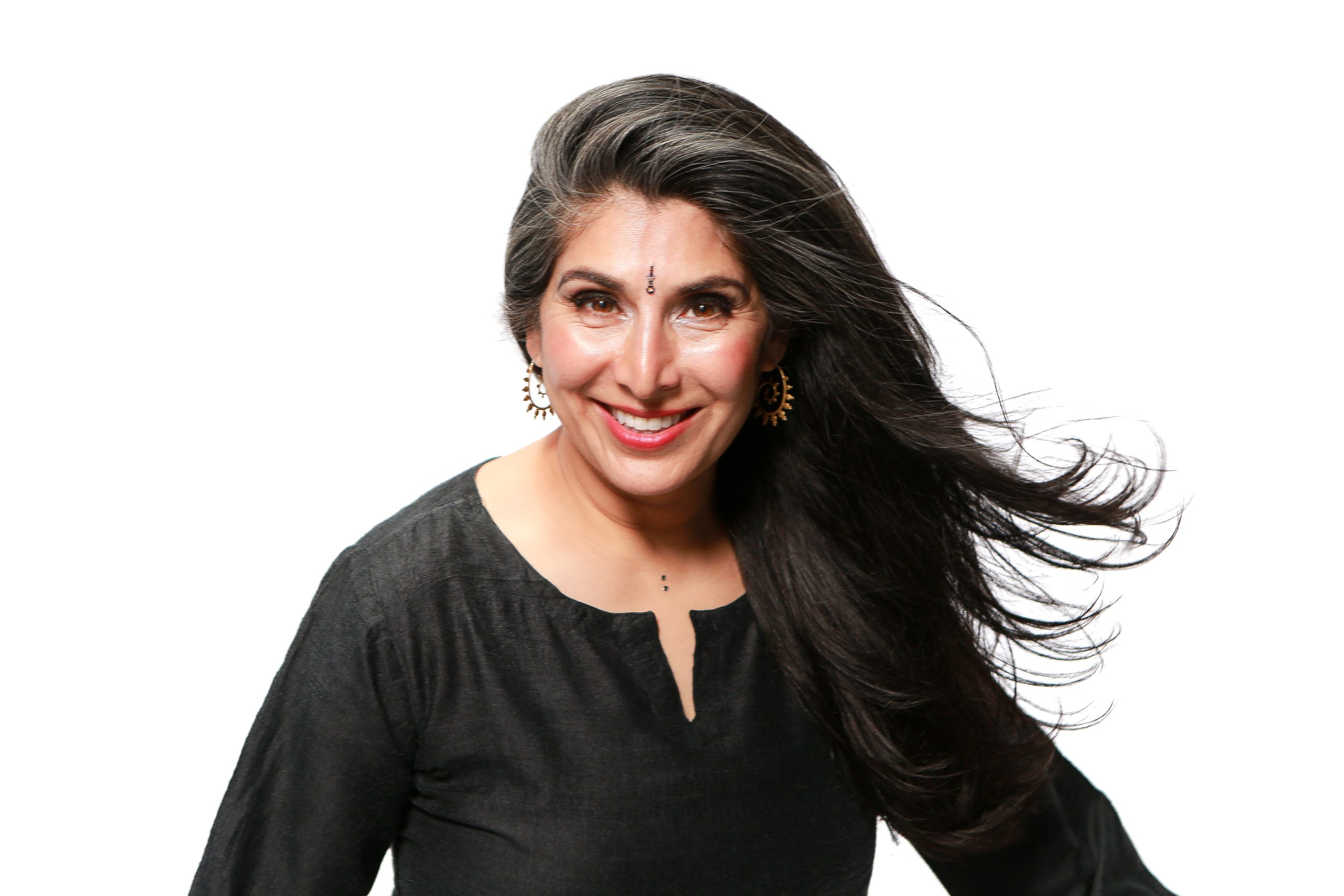
There was a time when Bhangra, a folk dance of rural Punjab, was hardly known in America. Immigrants loved it but in the 70’s, many were shy of doing it in public places or drawing attention to it in mainstream America.
Along came Sarina Jain, born and brought up in America and not a Punjabi, who not only made it a touchstone for young Indians as well as for mainstream Americans by unleashing a fitness frenzy using this village dance as the vehicle. Masala Bhangra practiced first in basements and temple yards has 25 years later become an American success story. This year on the anniversary of Masala Bhangra, Sarina introduced a short film about her endeavor and this month is releasing a book “All You Need is Balle Balle”.
What memories did she have of India that made Bhangra such an important part of her life? “My parents were born in India and immigrated to the United States in the 1970s, and I was born and raised in California,” she says. “Growing up, I was surrounded by families from many different backgrounds, and that exposure gave me a deep appreciation for Indian culture as a whole. My sister and I initially loved hip-hop and popular dance styles, but in our teenage years we discovered Bhangra. Along with friends, we formed a Bhangra team called Dhamaka. We practiced every weekend and performed at local talent shows and competitions.”
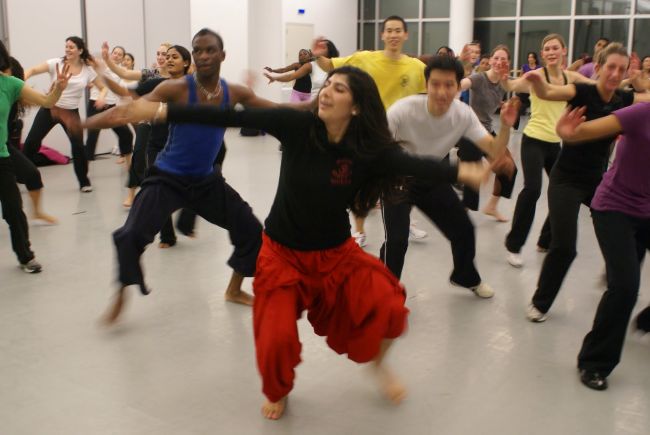
Although she and her sister traveled to India every year as children, those trips weren’t centered around Bhangra. They were about spending time with family, connecting with roots, and being immersed in Indian culture. Recalls Sarina, “Ironically, it was through one of our Punjabi friends in California that we were introduced to Bhangra. What began as a hobby quickly became a passion and eventually a life’s calling.”
What were the difficulties in starting Masala Bhangra? It was a rough road says Sarina. “The biggest challenge was launching a completely new concept with very little support from my own community. In the beginning, the only people who truly believed in me were my mother and my sister. Their unwavering support gave me the confidence to keep going, even when others questioned what I was doing. While the lack of support from my own community was disappointing, it also taught me resilience.”
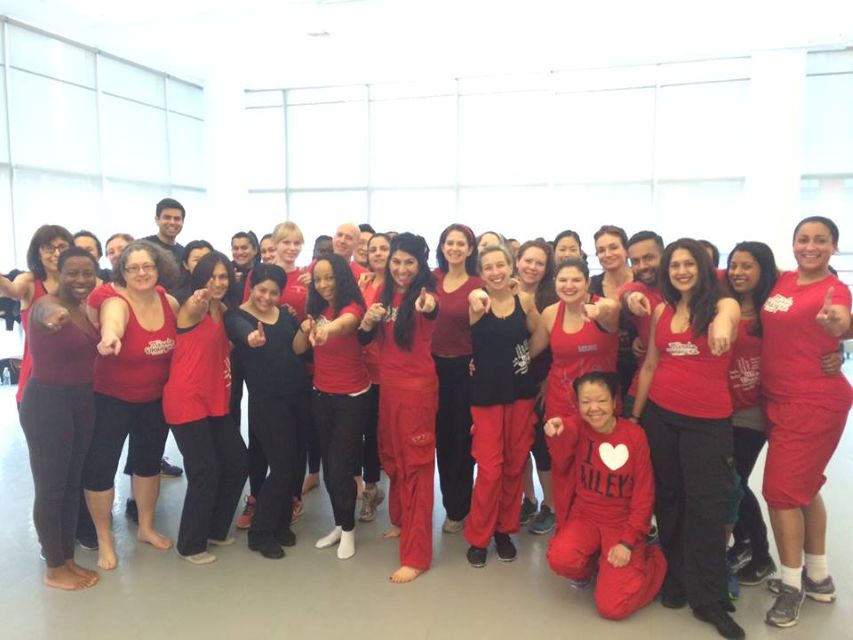
When she first started teaching Masala Bhangra classes, she imagined the room would be filled with Indian aunties and uncles. Instead, the people who showed up were Americans from all backgrounds and walks of life. They embraced the program immediately and saw value in it before many people in her own community did. Says Sarina: “Their enthusiasm helped me view Masala Bhangra through a different lens. I realized that while the program was rooted in Indian culture, its message of joy, movement, and connection was universal.”
Masala Bhangra received an incredible response, especially when the first workout video was released in 2000. Why does she think there has been such an overwhelming response to Masala Bhangra? “I believe people connected with it because the movements were simple, accessible, and fun and it was different from the standard aerobics. I focused on teaching in a way that made everyone feel welcome, regardless of age, fitness level, or dance experience. The choreography was easy to follow, easy to modify, and easy to enjoy.
More than anything, people felt successful from the very first class. They could move, sweat, smile, and celebrate without feeling intimidated. Twenty-five years later, that philosophy hasn’t changed. Masala Bhangra continues to bring people together because it makes fitness feel joyful rather than intimidating.”
What changed? Why have Indian culture and traditions become so popular and been embraced by the mainstream? “I think we’re seeing the natural evolution of a growing and thriving community. Indian culture has become increasingly visible across politics, business, entertainment, wellness, food, and technology. As more South Asians have stepped into leadership roles and shared their stories, the broader world has become more curious and appreciative of what our culture has to offer.
At the same time, people are recognizing that many aspects of Indian culture—from movement and mindfulness to food and community—have real value and relevance today. It’s a combination of timing, visibility, representation, and a greater appreciation for cultural diversity. The world has become more interconnected, and Indian culture is finally receiving the recognition it deserves.”
Women have played an important role in Sarina’s life—from her mother to her daughters. What inspires her and them to embrace strong, independent roles?
“My mother has always been my greatest role model and strongest supporter. Even before my father passed away from a sudden cardiac arrest at the age of 47, she was the steady force in our family. After his passing, she faced enormous challenges and societal pressures, yet she chose to follow her own path rather than conform to expectations. She trusted me when very few others did. Her belief in me gave me the courage to pursue my dream and build Masala Bhangra from the ground up.”
It is great to be surrounded by a tight-knit circle of women. Sarina adds, “My sister and I made a promise when we were young that no matter where life took us, we would always remain close. That bond continues to be one of my greatest sources of support.” Her young daughters are a great source of strength too: “They have expanded my perspective, made me more compassionate, and remind me of the importance of leading by example. Watching them grow into confident young girls motivates me to continue breaking barriers and creating opportunities for future generations.”
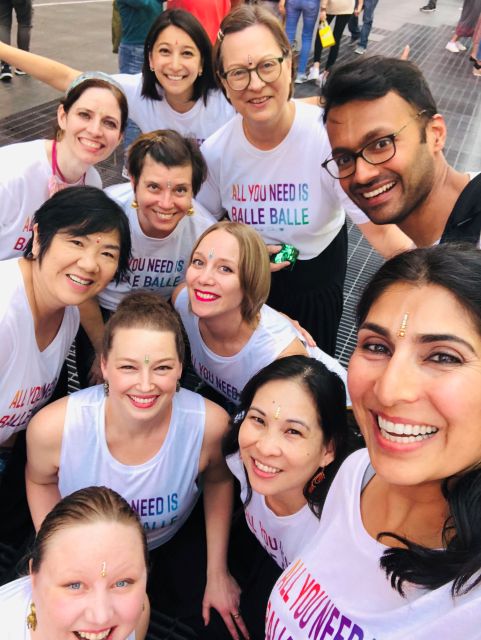
And now there is her first book All You Need Is Balle Balle, Says Sarina, “It shares how I transformed heartbreak into purpose, forged a unique path as the first woman to bring Indian dance fitness to the global stage, and built a worldwide movement rooted in joy, culture, and community.”
What are her plans for the next 25 years? Says the Masala Bhangra Girl, “Right now, my focus is on continuing to grow the Masala Bhangra community through our Ambassador Program, adult performance workshops, corporate wellness programs, and speaking engagements around the world. My mission remains the same: to inspire people to move their bodies, celebrate culture, and build meaningful connections.
As for the next 25 years, my goal is simple: keep moving, keep teaching, keep inspiring, and continue creating spaces where people of all backgrounds can come together through culture, fitness, and joy.”
