
New York Specialty Food Show Sense-Maxes Flavors, Heat and Spice For the American Consumer
The 2026 Summer Fancy Food Show from the Specialty Food Association (SFA) brought thousands of specialty food innovators, buyers and distributors for three days in June. This massive event at New York’s Jacob Javits Center was almost a graph of the changing tastes of the American food consumer, celebrating the current hot trends of ethnic tastes, spices and global flavors along with a demand for healthy and organic foods.
According to Fancy Forecast Specialty Consumer Outlook 2026 from SFA, the 2026 trend is sense-maxxin: “Sense-Maxxing represents the consumer desire for full-volume flavor, texture, and visual drama that prompts a reaction, validates reality, and affirms the very human capacity to feel.
This trend is emotional: “Consumers are turning to food not just for comfort, but for a jolt of electricity that cuts through the dullness. We crave the sour, the heat, and the crunch because these sensations demand our full attention. In a world that often feels synthetic and distant, intense flavor and texture are visceral reminders that we are here, right now, and we are awake.”
The Promiscuous Palate
Another trend the report notes is Promiscuous Palate: “As consumers encounter and embrace ingredients like gochujang, piri-piri, or miso, globally sourced products are becoming beloved building blocks of new, cross-cuisine dishes. We have entered a permissive era, beyond “fusion,” and this trend is all about exploration and creativity, particularly among consumers in increasingly multi-ethnic households and spaces.”
It was amazing to see how Indian, South Asian and Asian flavors, as well as other ethnic tastes have seduced the American consumer. As the American palette has changed and more Americans are traveling, they have brought home their adventures of spice and are much more knowledgeable about ethnic spices and flavors. For those who keep Desi statistics on their radar, they will be happy to know that Indians and other South Asians have really infiltrated the American food industry.
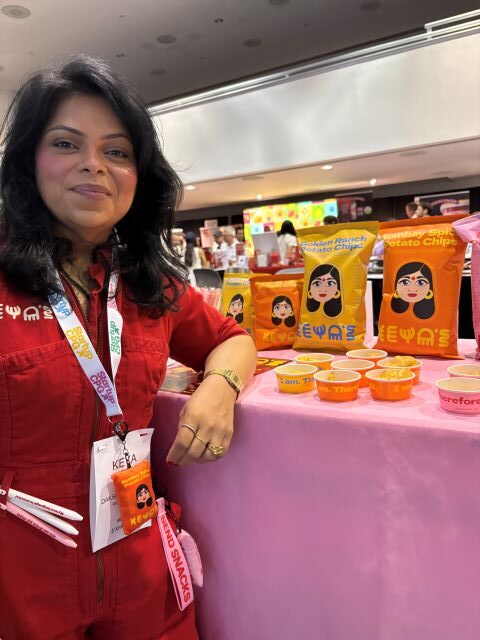
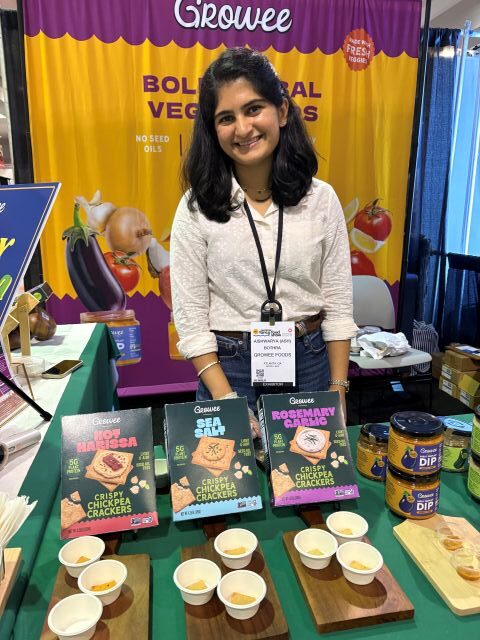
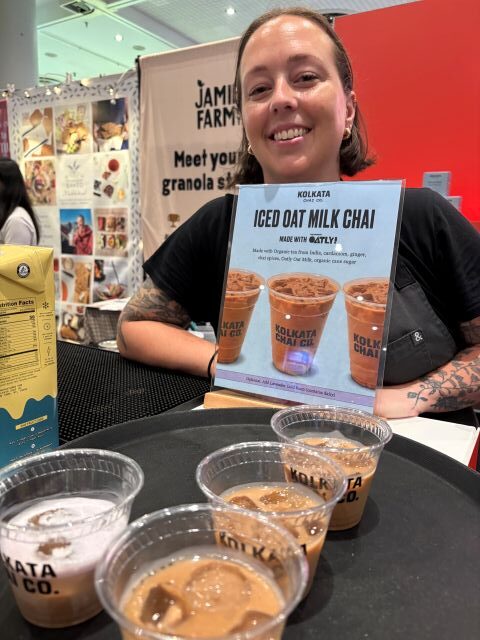
Indeed, an Indian from Mumbai or a Pakistani from Lahore at the SFS would have felt right at home with the way South Asian flavors had slipped into every meal from breakfast to dinner, not to mention snacks, desserts and drinks. If yoga has taken over American lifestyles, chai is one of the bedrocks of their drinking world. A decade ago, to be a vegan or a vegetarian was a very lonely calling – now, with the American emphasis on well-being, the Specialty Food Show was also bursting with innovative vegetarian and vegan choices from every nation.
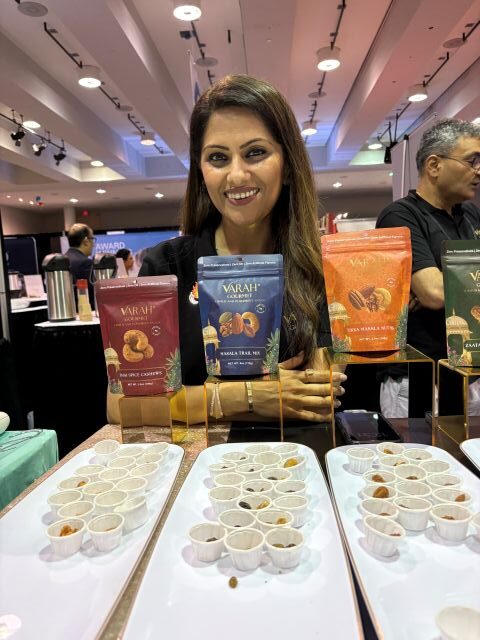
What was particularly interesting to me was the fact that almost all products were including ethnic spices in them, be they chocolates, soups, or foods from different countries. Everyone seems to have understood that the American palette has changed, and spice and ethnic flavors are very much a part of it. Also, as the population has changed with so many immigrants living in America, everybody hankers for the taste of their homeland, be it a remembered spice from their mom’s masala box, or a golden sliver of Alphonso mango.
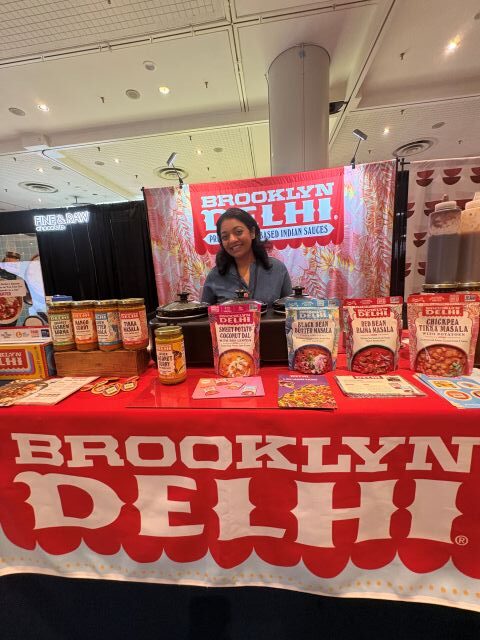
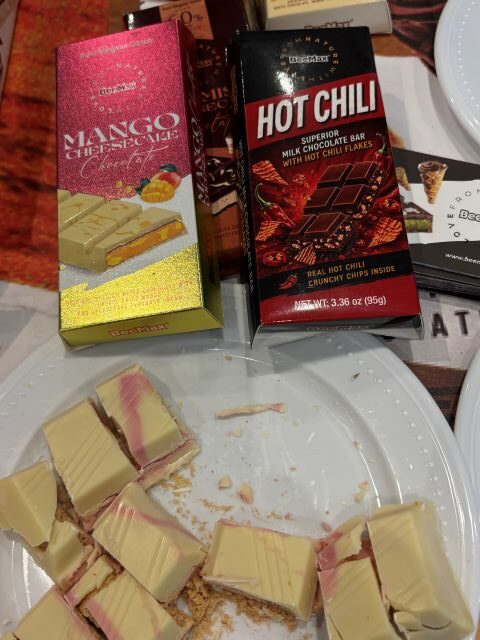
The Specialty Foods Show highlighted the integration of spices and ethnic flavors into various foods, producing chocolates bars with chilies, and varied mushrooms. It was a celebration of the merger of global cuisines, offering a diverse culinary experience without the need to leave your neighborhood. A company called Lentiful, which bills itself as the ‘healthiest Fast Food Company in America’ actually had a ready to eat Tikka Masala made out of lentils, along with lentil Thai Coconut Curry and even Mexican Green chili. The scores of chili sauces alone could have spiced up America as they sailed from many countries and will find a place in thousands of local home kitchens.
The changing tastes of Americans are due to many reasons, including increased global travel which has made their palate more adventurous. They want to incorporate spices and heat from every culture into their plates, and the hundreds of Indian and Asian restaurants have just added to the easy familiarity. The millions of immigrants from many lands have brought their food habits from their homelands and created fast food chains and small eateries to bring their much-loved home food to their neighbors.
The Rise of the Second Generation Foodies
One remarkable change I noticed was that the children of immigrants, long embarrassed by the pungency and ‘smell’ of their own home cuisine, especially when they were in Junior school, are now not only proud of it, but are avid evangelists who want to broadcast the virtues of Indian food.
I was surprised to find that this change had been noted by SFA’s report on trends for 1026. It noted: “We are witnessing the rise of “Third Culture” creatives. A new generation of founders and chefs, often children of immigrants, is claiming the freedom to evolve their own heritage, to mutate tradition and tell new stories. Simultaneously, cuisine is decoupling from geography—in a connected world, flavor knowledge has been decentralized. The Promiscuous Palate mindset reflects a culture where respect for ingredients is expressed through innovation, not just preservation.”
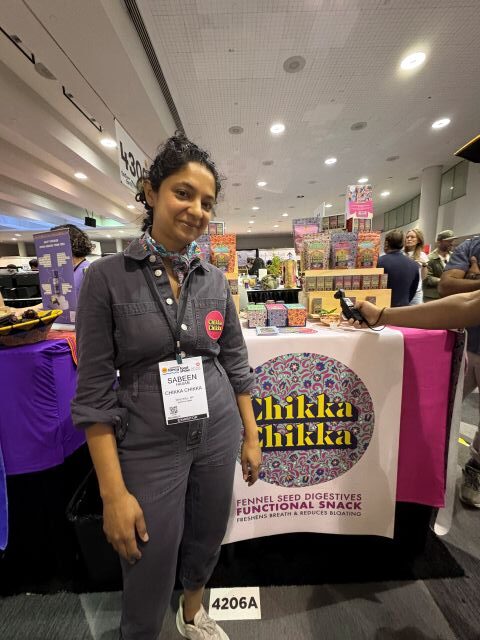
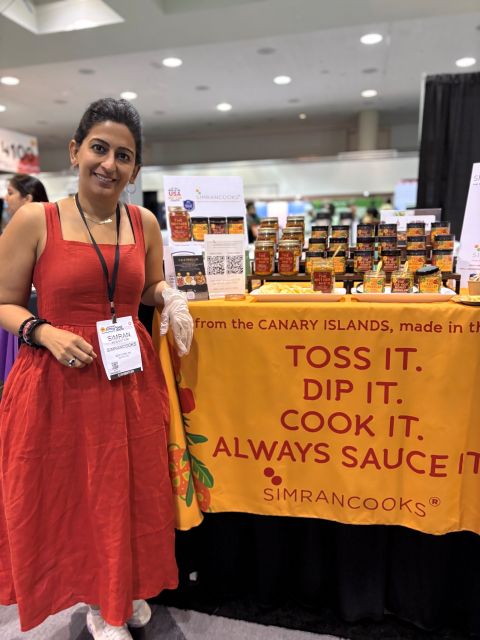
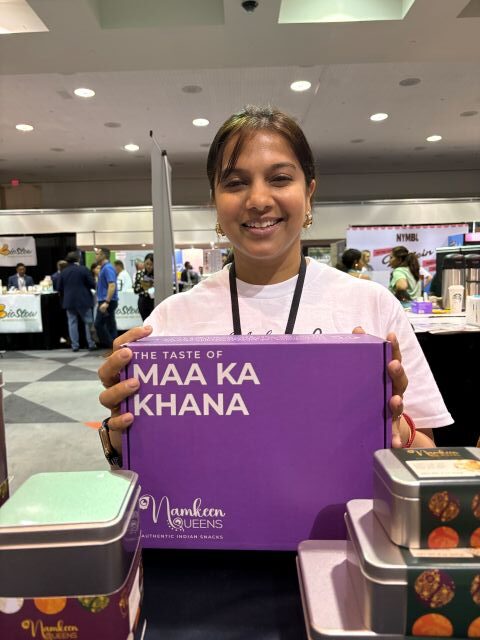
At the Fancy Food Show, I saw so many second-generation Indian-Americans manning stalls and cajoling buyers to try their wares. Many remembered flavors were transformed into delights for the mainstream, such a Chikka Chikka, a modern take on the traditional Indian fennel seed digestives which was a must in India after a robust meal. The New York Times Wirecutter called them better than gum and the best self-care gifts.
For those who understand Hindi, what can be more nostalgic than ‘Maa Ka Khana’ – mom’s cooking. Maa Ka Khana is the tagline Aishwarya Shankar created for the company Namkeen Queens which she co-founded with her mother-in-law Sushila: “It’s basically my mother-in-law’s recipes. I’m actually from Chennai, and she is from Kolhapur in Maharashtra.” The sweets and savories are made in Mumbai and packed and marketed in New York. The two women are the Namkeen Queens who bring their authentic Maharashtrian treats to the American public.
Simrancooks has perfected the take on Spain’s Canary Island’s mjo picon – it is the super sauce for adding flavor to everything from pizza to avocado toast to eggs. It also conjures up a great paella in no time so it’s a useful item to have in your pantry.
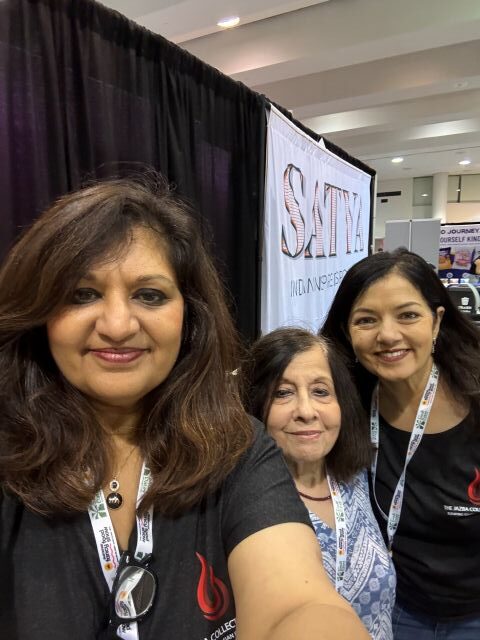
Anita Lulla and her daughter Rama Ginde have started ‘Satya’ inspired by their grandmother Sati’s cooking and recipes. Their innovative spice blends can transform any cuisine and have found many fans and are now available in Sprouts and Walmart. The delight is in being able to use these India-inspired spice blends in the cooking of any culture.
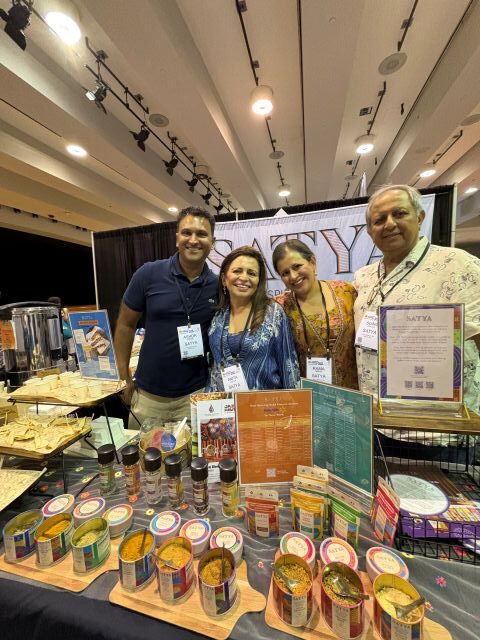
The Jazba Collective for Second-Gen Founders.
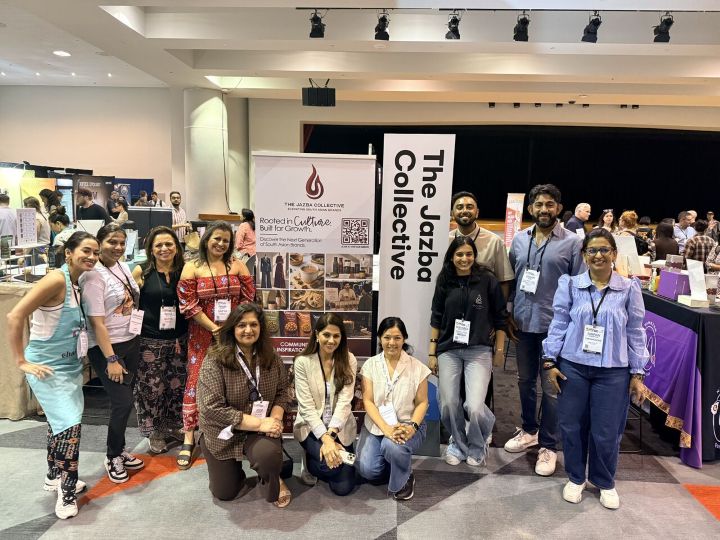
In fact, I met with the enterprising Jazba Collective, an organization of second gen founders who have banded together. The two California based co-founders are Asha Chandra and Ruchira Pungaliya. As Chandra explained, “ The Jazba Collective is showing the specialty food industry what our cuisines and cultures have to offer. Our growing database of South Asian consumer brand founders are driving innovation and change. Our members get fellowship programs and can leverage our extensive network for introductions to investors, distributors, and buyers.”
From India with Love – Basmati, Tea, Lentils and More
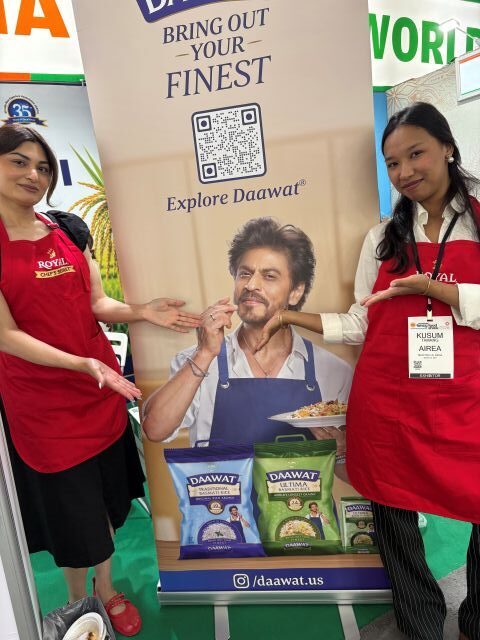
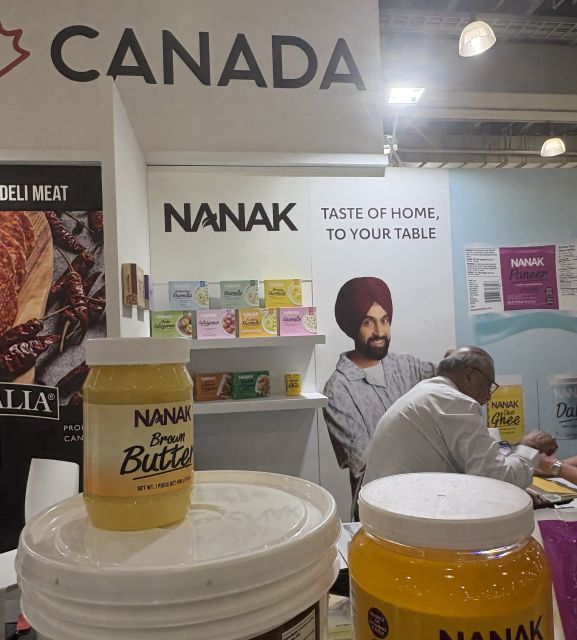
The Indian exhibitors came not only from India but from London, Canada, the US and the Caribbean, where the Indian migration started over a hundred years back. So, as you walked around you saw the many Indian traders of rice, tea and legumes who had come from India, some giving tastes of chicken and vegetable biryani, and of popular desi snacks like samosa and aloo tiki.
Superstars Shah Rukh Khan and Diljit Dosanjh beckoned consumers to indulge at the Indian Pavilion, albeit through their life-sized posters, and for the real thing, there were Kesari and Alphonso Mangoes – the kings of Indian fruit – in the flesh. Cartons flown in from India were opened right there and the much-loved mangoes were being cut up and served to the drooling crowds.
The Coming Mung Revolution
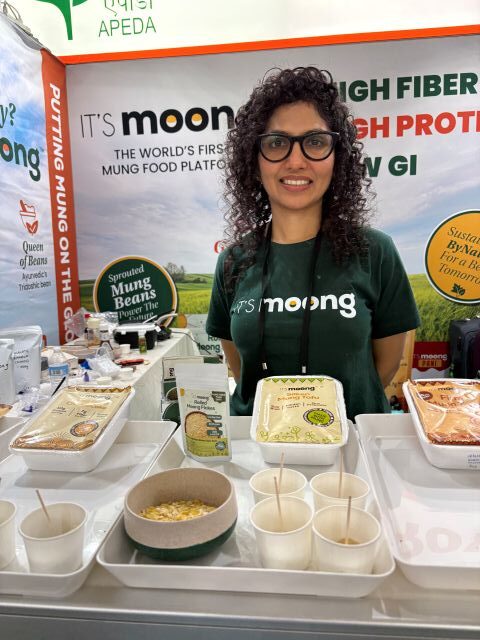
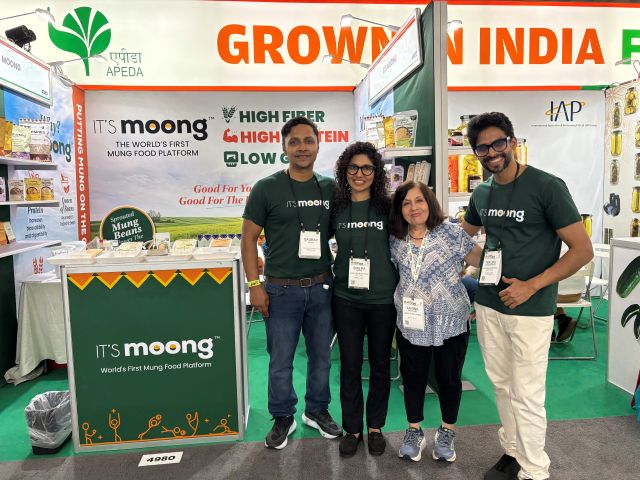
Perhaps the most groundbreaking item for me was from an exhibitor from India, who had really capitalized on the great value of mung beans in the food habits and the health sphere, long overshadowed by peas, soya and oats as good sources of protein. Shilpa Rathi of Lakavish Nutratech is trying to bring about a Mung revolution with her new product, It’s Moong. She had actually processed beans and created ready to eat mung bean tofu, mung bean cheesecake, mung crispies, mung textured protein, sprouted mung protein and mung soup. Since mungs are low glycemic and high in protein and fiber, and a sustainable crop, they are a welcome addition for those who need to be dairy-free, gluten free and soy-free. The mung cheesecake was quite delicious!
From Motels to High Protein Cheese, Patels Everywhere
Indians seem to be the face of food businesses, in the backend, as well as involved in the creative and financial aspect. As we know, Patels especially are in every business under the sun: they run the majority of American motels, there’s a Patel known for the Rocky Patel cigar and yet another Patel has a noted winery in California. At the SFS, I met another Patel -Sandeep Patel who is the CEO of Bettani, a US-based dairy-free, high-protein cheese company. He said, “As you know, a lot of Indians are lactose intolerant. They don’t want to admit it, because then they would have to drink less chai, drink less, eat less gulab jamun, whatever, but we have a solution! We make cheeses that are high protein and dairy free, so no lactose, no dairy allergies.”
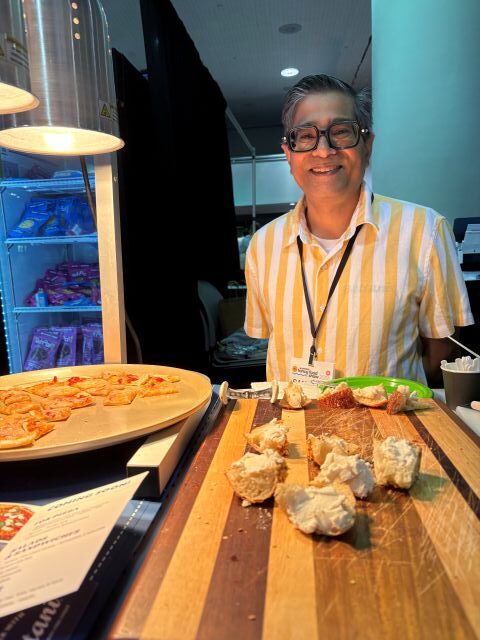
Patel mentioned that his company has the patent on the protein and he has a network of co-manufacturing partners. There are several Indians involved and the head of R and D actually did his PhD in Dairy Science in the US. Finally, I asked Patel, “How did you come up with the name Bettani?” He said, “I took the word ‘better’ and made it sound Italian!”
Mushrooms are a super food which I saw being used in cuisine from many countries, as all consumers are trying to incorporate them into their food. So, there were wholesalers of all varieties of mushrooms, as well as companies selling frozen, dried and ready to eat mushroom fare. Even sweets and desserts are incorporating mushrooms. I was surprised to see Fine and Raw’s 70% dark chocolate mushroom bars with lion’s mane, cordyceps and chaga, as well as ashwaganda and holy basil.
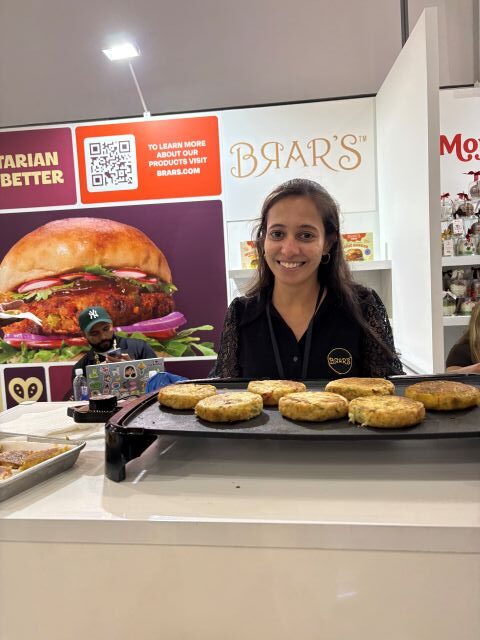
Mushrooms were included in many of the ready to eat meals, and now Brar, the frozen foods company from Canada, had also incorporated mushrooms into their popular cutlets. They also brought a new spin on to samosas with the pizza flavor, so the Specialty Food Show was all about the dialogue of different ethnicities and nationalities, all sort of trying to speak a universal language.
What was interesting to see was the number of family-owned businesses where food was a passion and a calling. Shauna Vo Pulayya is the co-founder of West Indies Peppa Sauce WIPS which is a family owned business from the Caribbean with a recipe which has been nurtured for four generations and is still made in the old fashioned way.
While the Specialty Food Show is only limited to professionals – buyers and media – I think one extra day should be added with paid tickets so the ordinary consumers can also get a chance to visit and enjoy. After all, they are the ultimate consumers who will vote with their dollars and cents whether these products make it to their homes.
It would be soft diplomacy at its best, with people from many nations interacting over a bowl of ramen, a gulab jamun or a falafel, learning to meet everyone from Russians to Italians to Chinese as friends, and not as strangers from alien lands. Ordinary Americans could get a taste of the world while still being in New York. All they would have to do is catch a subway to Jacob Javits Center and experience and taste the world.
Related Article:
2025 Summer Fancy Food Show Brings New, Global Flavors
