
Hyderabadi Zaiqa takes Manhattan, One Biryani at a Time.
By Lavina Melwani
This is a tale of how three unknown chefs with unknown names conquered New York’s food world with Hyderabadi Ziaqa.
Hyderabadi Zaiqa? What’s that? It’s the new kid on the block in New York’s ever churning, unstoppable food universe. It’s the restaurant Zohran Mamdani named as one of his favorites and visited at least seven times during his mayoral run.
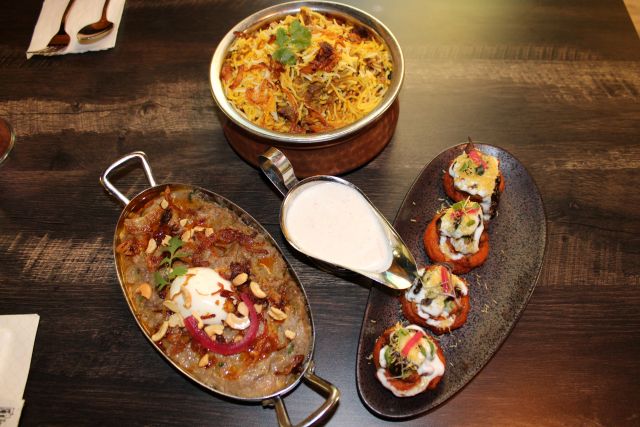
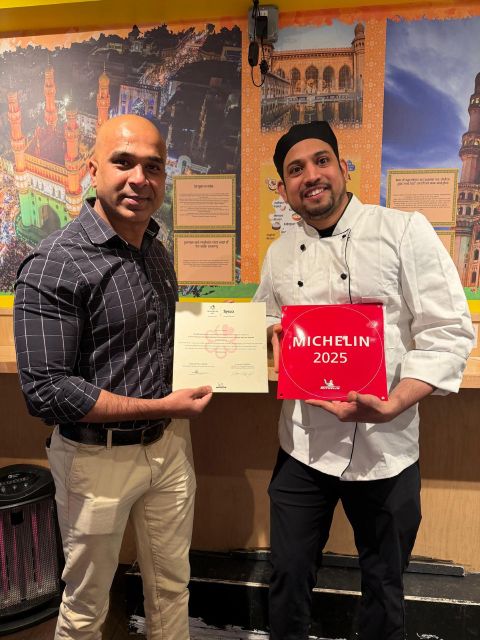
Mayor Mamdani loves biryani and haleem and any restaurant which is so close to the 6 subway line is bound to be close to his heart. But it’s also won over the top food critics and been anointed with a Michelin 2025 notation. New York Times recognized it in 2424 among the 100 best NYC restaurants and critic Pete Wells wrote, “Biryani is the pride of Hyderabadi cuisine and the point of Hyderabadi Zaiqa. More than a dozen are available, from a staunchly traditional and ferociously spiced dum biryani augmented with slow-roasted goat to the Chicken 65 biryani, featuring a spicy, lava-red chicken invented several years ago at a hotel in Chennai.” Eater magazine marked it among the 38 best restaurants in New York, while Bloomberg called it the most affordable restaurant in New York.
Indeed, in these tough financial times, affordability is key as every visit to any restaurant seems to cost an arm and a leg and a big bite of your credit card! Browse the abundant menu at Hyderabadi Zaiqa and the prices seem to be surprisingly and modestly old-fashioned, where it’s possible for a middle-class family to feast and even splurge on dessert.
So, what’s going on here and what’s all the commotion about? Why are people so excited about a humble eatery which in its earlier avatar in Hell’s Kitchen was hardly bigger than a closet? These chefs don’t have celebrity status and are hardly 30-something. They are even younger than our young mayor – so I decided to go and investigate.
How the Biryani-Wallas Conquered Manhattan
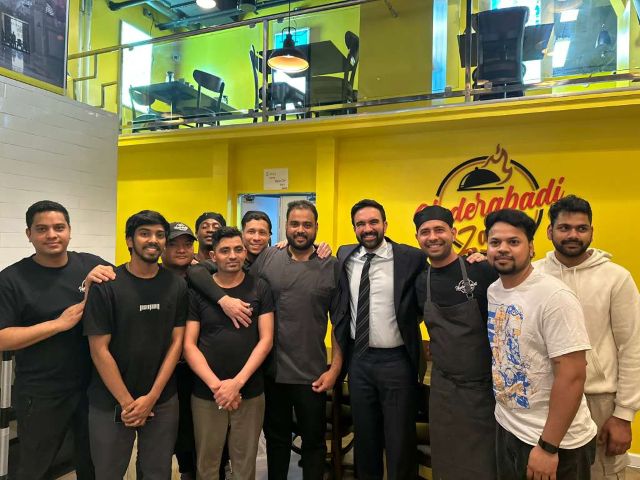
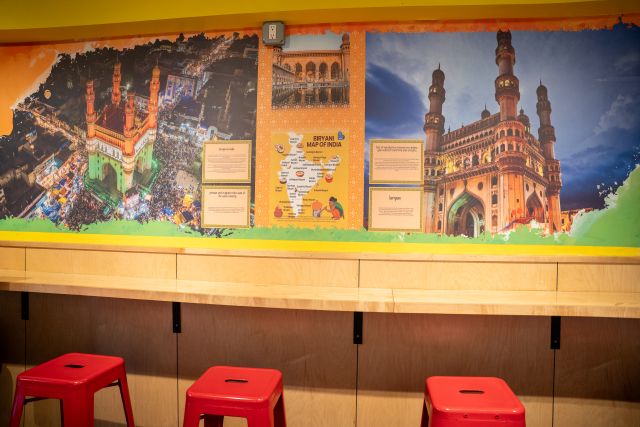
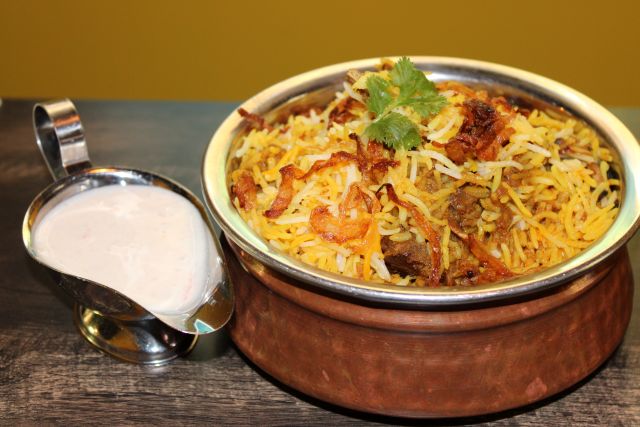
Hyderabadi Zaiqa is wedged in a line of small nondescript Indian, Bangladeshi and Pakistani restaurants on Lexington Avenue, affectionately known as Curry Hill and Little India. The eatery is by no means luxe or uber stylish but is a fun, casual canteen with a spunky splash of yellow, cheerful, especially on a New York winter afternoon. Red stools and a Biryani map of India on the wall set the mood, and copper bowls and cutlery make the meal relaxed, a whiff of upscale!
The three chefs came to the US when they were 20-somethings and hail from different parts of India. Chef Muhammad Tarique Khan is from Rourkela in Odisha and his co-partners, Chef Jayesh Naik and Rahul Vaze are both from Mumbai.
Journeying from India to America, each struggled and searched their way through the food world until finally Hyderabadi Zaiqa became their very first independent venture, a testament to the guts and creativity of immigrant dreamers.
“When I was growing up, I’d always see my grandmothers, my mother, my sister cooking – but I would never see my father cooking!” recalls Chef Tarique, whom I interviewed recently. He had to temporarily leave school at the age of 13 due to a family financial situation and work in a butcher shop which provided meat to several hotels. This was an eye-opener, for when he went for delivery, he’d see the large mark-ups the restaurants made. So, what initially attracted him to the hospitality industry was the profits, but when he actually entered the business he realized it was an honor: “You are serving community – you are connecting people through food. If you want to touch anyone’s heart, if your food is good, people will connect with you very fast. That’s why when I was 13, I had already decided that I would feed people.”
While working part time, Tarique eventually finished school and graduated from the Institute of Hotel Management (IHM) Bhubaneswar. He worked with Park Hyatt in Hyderabad which sent him to different metros in different regions from Cochin to Kolkota to learn different techniques.
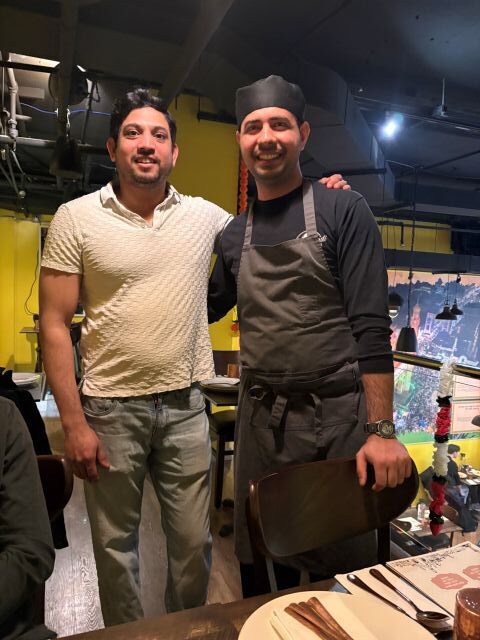
“I was always eating food over there, and always making food, creating food,” he recalls. His curiosity and love of food made him absorb everything, but it was really Hyderabadi cuisine he wanted to promote, since it all started with his grandmother’s Dum Hyderabadi Biryani.
Eight years ago, when he came to the US, he was working with Hyderabad House and opened almost 22 locations promoting Hyderabadi cuisine, starting out in Columbus, Ohio, and moving on to Kansas and Chicago, setting up the kitchens and training the workers.
At that time Priyanka Chopra’s restaurant Sona in New York had just opened and was creating a buzz. Tarique was referred to by a friend, and was selected for the kitchen after an interview, working there for one and a half years.
While in college, he had heard about the acclaimed restaurant 11 Madison Park and had always wanted to work there. “So, I went there twice and both times they rejected me, according to my experience. Later on, I tried once again and they took my trial, and they gave me an opportunity to work there as a line cook. I worked there for one and a half years and learned so much. Now I understand why people pay $300- $350 just for one course there!”
In the meantime, his would-be partner Jayesh Naik was also trudging his way to success. He had also picked up cooking from his mother and grandmother. His grandma, who is now 90 and lives in Vasai, a coastal village in Mumbai, still cooks his favorite Konkani fish curry. That love of cooking led him to work in India at ITC Maurya before he came to the US. Here he worked for several caterers promoting Indian food.
The two chefs met during Covid times, and both found themselves cooking in Parsippany for Indian students who needed affordable food. As they came to know the community and people started appreciating their food, they decided the time was right to open a restaurant in New York. As there were many fine dining restaurants, they felt the real need was for affordable food of good quality. Tarique, while working for upscale restaurants, would then put in after-hours as a delivery person for Grubhub and DoorDash. Encountering different segments of the food universe, he tried to understand what people really want from Indian food and what was missing in New York.
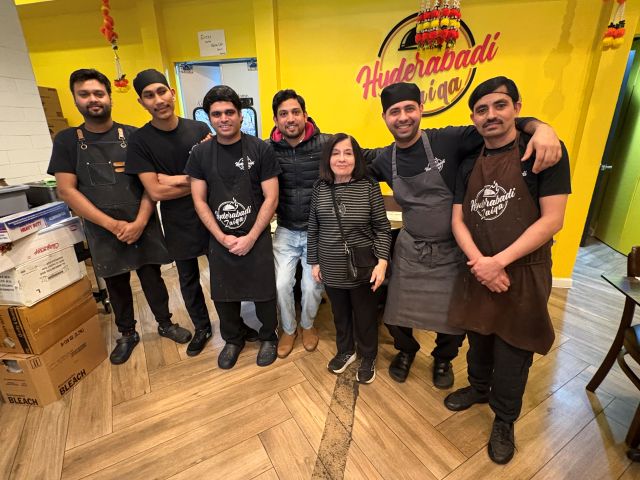
At Hyderabadi Zaiqa, remembering their own journey, the chefs have kept the prices affordable and the food fresh, a real taste of home. The location ensures they have a captive audience: regular customers and some are daily visitors, picking up both lunch and dinner. Many work in the area and there are students from NYU and Columbia, and workers of tech companies in the area. At their 52nd street location in Hell’s Kitchen, they take no reservations and takeout is offered for theater goers and tourists from the miniscule location. From just three partners who still do all the cooking, their staff now has expanded to 30 workers.
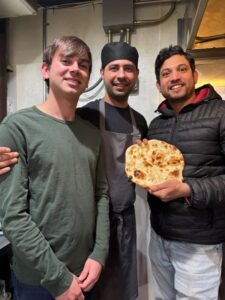
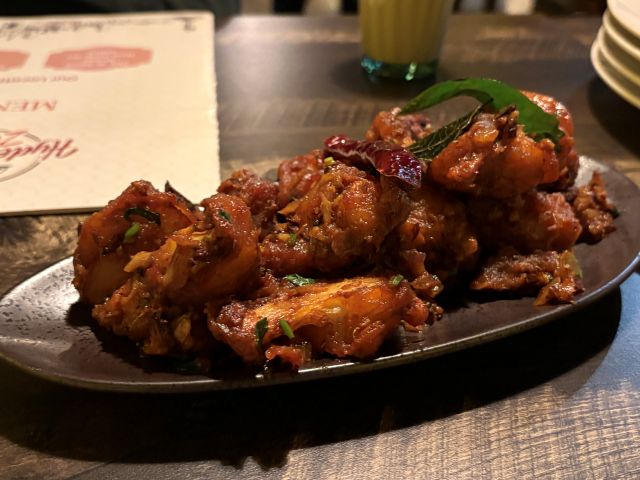
Tarique says their inspiration is the people they feed: ordinary people, immigrants from South Asia, who are longing for a genuine taste from home. Besides keeping the prices low, they also bring in the authentic dishes people are missing and don’t find everywhere such as home-made alu mattar or bindi masala, cooked with spices imported from India, many from Hyderabad. Besides the signature Hyderabadi cuisine with its halal and spicy flavors, they have made space for comfort foods like Indo-Chinese and North Indian foods. “We explore the opportunities and provide what people really want and enjoy.”
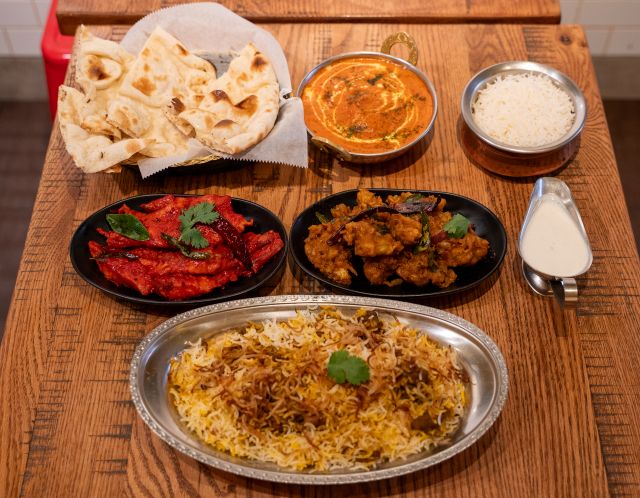
The biryanis include the Hyderabadi iconic dum goat biryani besides chicken, lamb, fish and shrimp biryanis. The Avakai chicken biryani has mangos in it while the Gangura Chicken Biryani is flavored with the aromatic gangura leaves. Fortunately for vegetarians like me, there are vegetarian versions, including a paneer biryani.
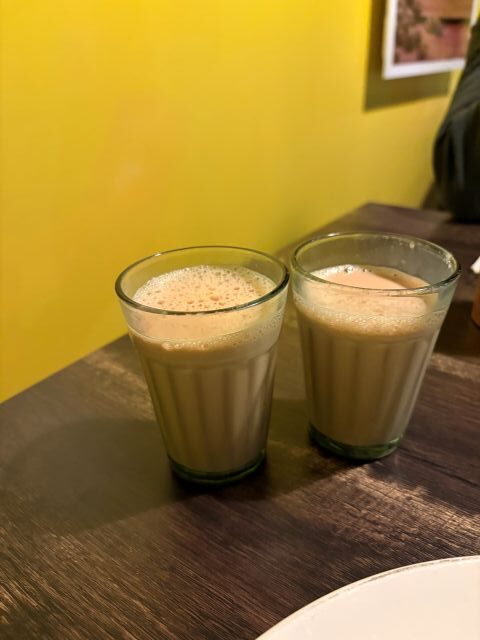
I spent an afternoon with the chefs and their staff, starting my initiation with thick, milky Iranian tea which is found in so many Irani cafes in Mumbai but which I’ve never tasted here. While Hyderabadi Zaiqa is known for its meat dishes like biryanis, kebabs and haleem, I was happy, as a vegetarian, to find many plant-based dishes. I ate the baigara bagan and biryani, without which any wedding in Hyderabad is incomplete. Who can resist Gobi Vupudu or Paneer Tikka or four different types of vegetarian biryani? Strolling through the bustling kitchen, one could see the happy camaraderie of the Biryani Wallas.
The road to Hyderabadi Zaiqa has been tough, for starting a small business in New York is no joke. They pooled in their savings and invested in their first restaurant – but they were first rejected by 30 landlords! Having no mentors or investors, it took almost four months to get the location they wanted but finally they found a landlord who believed in them. Mr. Chu, an immigrant like them, had himself come to the US in 1960, and struggled like them. Today he owns 50 buildings all over the city and has been a virtual godfather to them.
This March they open their third Hyderabadi Zaiqa, right next to the one with just three tables on 52nd Street – this time it is a massive 60 seater where they will take reservations but will keep the prices affordable. They have no intentions of hiring a head chef or offering alcohol. The three strugglers from India have kept to their values and have climbed to the top of the Biryani Mountain, a source of pride to their grandmas. Hyderabadi cuisine Jai Ho!
More information at hyderabadizaiqa.com
