Our Communities:
Gender Equality – an Aspiration for India and the Diaspora
Women were centerstage this month and women from India and Indian women from the Diaspora had come together at the Consulate of India to celebrate International Women’s Day together. The special guest was the Honorable Minister of State (WCD) Smt. Savitri Thakur, and her delegation from India, who gave a report card on the progress Indian women had made over the years and celebrated their empowerment.

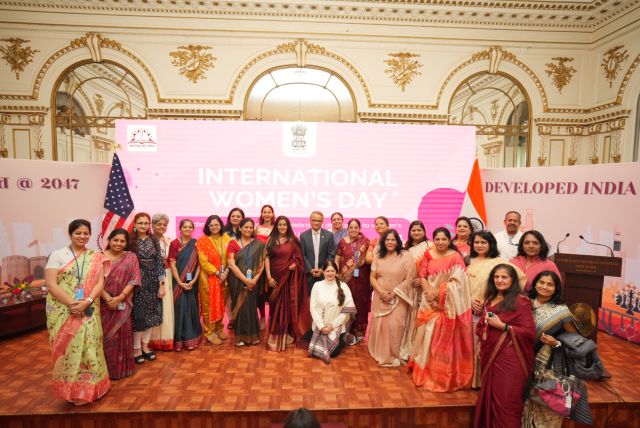
The literacy rate, which was 8 percent in 1951 is now 75 percent and women’s life expectancy has increased from 41 to 74 years. There are over 9 million self-help groups which benefit over 100 million families, especially in rural areas.
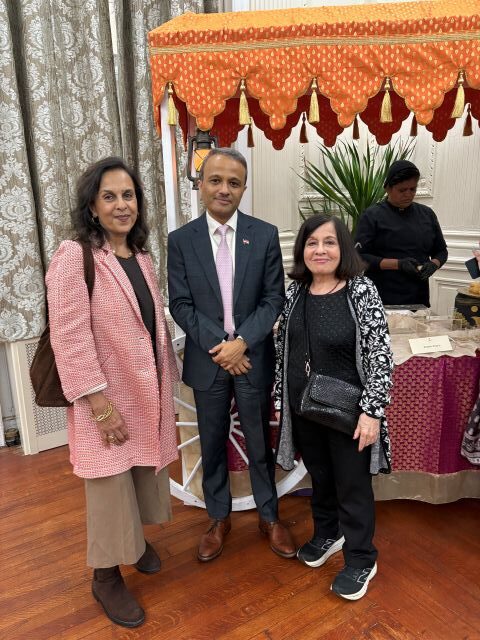
As the host, Consul General of India, Binaya Pradhan, noted, Indian women had made great strides in corporations, academia and science, as well as in self-help groups: “India has created the world’s largest pipeline for women in public office. Today, if you look at the numbers, out of total elected members in Panchayati Raj and municipal system, 14 lakhs are women. 1.4 million women are elected into the municipal system in India today, which is roughly 49% of the total elected officials. Recently, the parliament brought an amendment which takes 33% reservation, both at federal parliament and state assemblies for women. So that’s bringing Indian women right to the top in decision making at every level.”

Nika Shukla, of Bhartiya Stree Shakti, who serves as the coordinator of the National Short Film Festival, shared the spirit behind their theme, rewriting the stereotypes. “ For nearly four decades, Bhartiya Stree Shakti has worked to advance gender equality across India. Through this journey, we believe that true equality is difficult to achieve by uplifting women alone, but can be achieved by active participation of men.”
As she added, “It is an invitation to redefine the muscularity of our times. It encourages men to embrace empathy, to express emotions without fear, and to share responsibilities with pride. This theme is not about criticizing men; it’s about freeing them from the stereotypes that limit their duality. For generations, society has handed men an unwritten script, one that asked them to be strong but silent, successful but emotionally restrained, responsible but never vulnerable. This script has shaped families, workplaces and communities in ways we rarely question. But today, as the world evolves, the script must also evolve.”
By bringing this conversation at an international level platform, they hope to build a narrative that supports healthier men, women, relationships, stronger families and this shift strengthens the social fabric.
Grammy winner Falu Shah, who was part of the panel discussion, noted the importance of art and culture to perpetuate or end unhealthy stereotypes: ‘What we portray in cinema, music, in art, affects not only this generation, but also the next generation. So if we are going to portray partnership, respect and love towards other other people – it could be men or women – that’s what the cinema will portray. That is what the younger generation, the next generation, will inherit. So, the responsibility for an artist is actually greater because what we say becomes the story, what we show in films becomes the reality for so many people. So that’s a very big lesson that we as artistes have to remind ourselves every day, every minute, when we create a song, when we make a movie. Make sure you remember that what you’re creating has a ripple, not just for now, for the present – but for the future.”
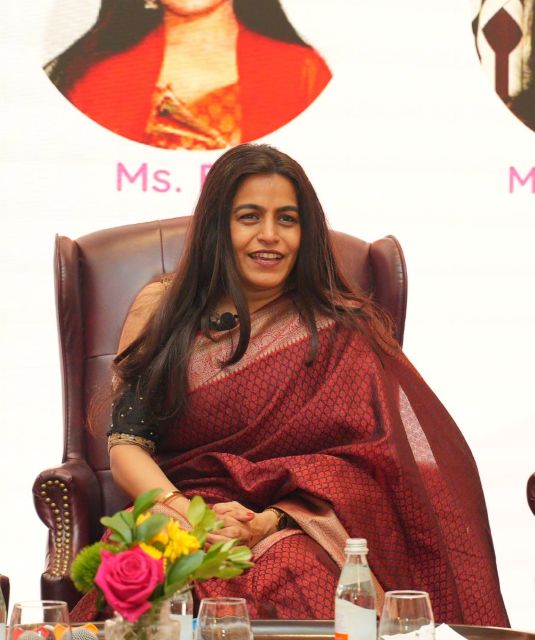
All the panelists discussed the bright possibilities for women both in India and the globe but agreed there is a lot of room for growth. Falu stressed the importance of women’s solidarity and of women helping women through their self-help organizations: “I think when a woman helps a woman, we grow much more so instead of being threatened by each other, let’s today make a vow. Let’s say I’m a sister. I’m behind you. Go fly, and if you fall, we’re going to be right behind you – so don’t be afraid to fall.”
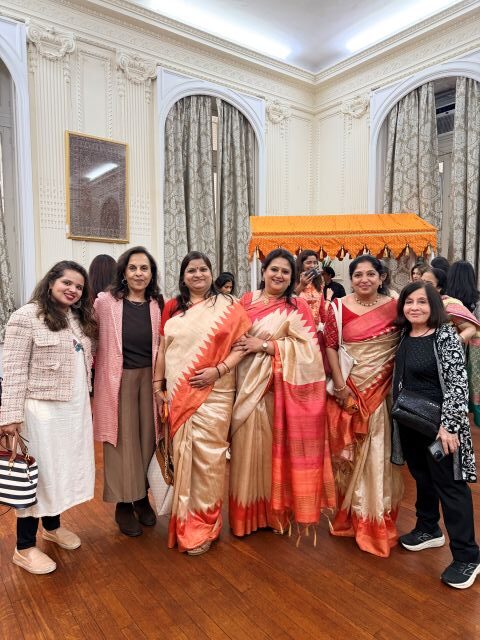
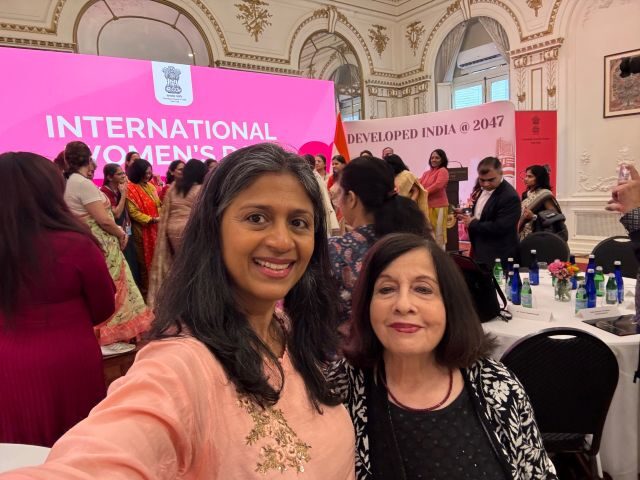
This feel good celebratory session was followed by a high tea with – what else – Masala chai, pani puri, samosas, mango lassi, paneer pakoras and all the delights of Indian food. The hall was a blast of multicolored sarees and women from all walks of life – artists, politicians, doctors, consultants, lawyers, Columbia students, writers – all happy to network and celebrate Indian womanhood.
Related Article: This essay is from 2014
Click and watch the video
International Women’s Day – Some Thoughts