JLF Spotlight: Are Immigrant Writers the Outsiders in America?
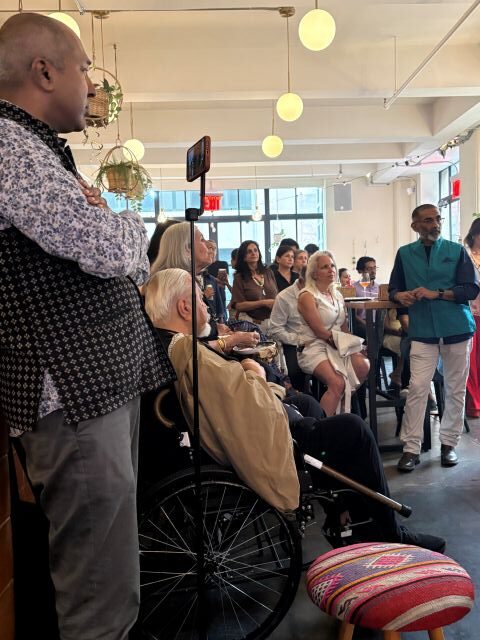
While the Jaipur Literary Festival USA happens only once a year, a new initiative now brings the JLF to New York every month in a special reading series. This is the start of year-round literary salons that will bring together readers and new and noted authors. This reading series had its inaugural in Dumbo, Brooklyn at the cozy Fontainhas which is named for the famous Latin Quarter in Goa, India. It is a natural gathering place for young South Asian-Americans with its desi-inspired vibes and eats like Bhel Salad, chaat board and masala chai.
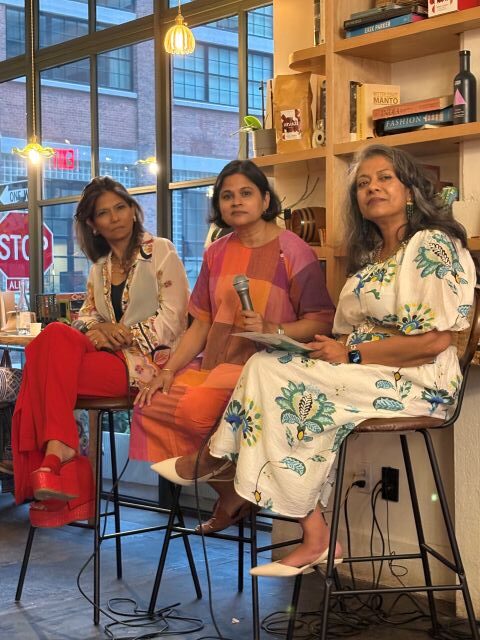
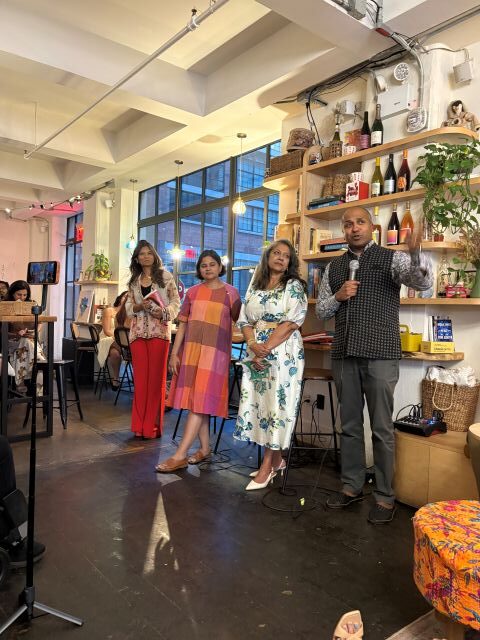
At this first event, authors Radha Vatsal and Chandrani Ghosh were in conversation with Devjani Dev, for the session ‘Headlines & Heartlines’ on what it meant to be a South Asian immigrant journalist in America in the early 1900’s, as well as what it means today.
Can the books of South Asian writers fit traditional mainstream genres and is there a place for the desi perspective in romances as well as in historical narrative?
As Dev observed, “As immigrant women, we have some sort of a responsibility to broadcast, publish, or educate people about our culture. Is that just a burden that you carry as a South Asian immigrant journalist?
So, at first glance, today’s novels could not seem more different, right? One set in 1907 in New York’s Chinatown, one in Georgetown in D.C. What could they possibly have in common?
I just happened to discover them very in close proximity to each other, and even though they are indeed rather different, as I read them side by side, I became convinced that the two protagonists, separated by more than a century, are actually in the same kind of conversation with the world around them, and actually even across the centuries with each other.”
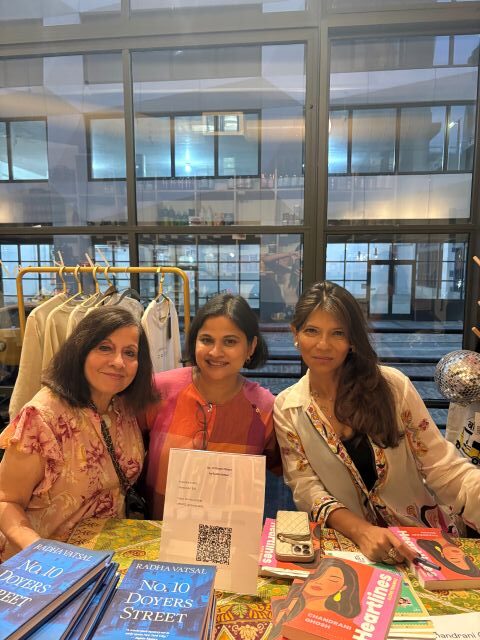
Dev noted that both authors chose journalists to be their protagonists, and that journalists occupy an interesting place in this storytelling world. “They observe and they tell stories. They record what they see, but for both of your protagonists, they kind of become a story themselves, and they become part a headline. So, I’d like to get your sense of why you choose journalist, not writer, not author, and how you expressed a lot of the immigrant story very beautifully and organically through their lives.”
Chandrani Ghosh, who is a seasoned journalist and the debut author of Heartlines, noted about her book. “It’s a contemporary story set in Washington D.C. at a world that I know really well, which is where media, politics, and the high-tech world intersect. So, it’s a love story set in that world and my protagonist is Sharmila Basu. When the book begins, she’s a political journalist who lives with her boyfriend Lionel Stern, a nationally known television anchor, in Georgetown. They’re the ultimate DC power couple so she has this picture perfect life somewhere in the 2020s.”
Radha Vatsal, who is the author of two crime novels, going for an Indian protagonist in a mainstream American story set in the 1900s in Chinatown of all places, was a challenge. In No. 10 Doyers Street, her protagonist is Archana Morley, known as Archie, a woman journalist from India in 19th century New York.
“I think most people don’t even think that’s possible. So that was a weird strike against it. And then having her tell the story of the Chinese community is like is the second. And I think we’re always being asked to stay in our lanes. So, I think a South Asian writer is told you should be just writing about South Asia and the South Asian experience, and particularly when it comes to history, it’s a question of who gets to write the histories.”
‘And at that time, I the idea of a South Asian person in New York it just seemed impossible to me. So maybe for three or four years, I tried to write it from my perspective as a South Asian, without putting a South Asian character in there, because I thought, oh, there was nobody like that. And finally, I got so frustrated that I said, okay, forget this. I’m just going to say New York, which had a population of 2 million people at that time. One of those people could have been Indian. I’m going to make her a woman, and I’m going to write this story because that’s the only way it’s been around me. Once I checked, it turns out, of course, there were South Asians in the U.S. in the late 19th century who came, and there were women who came to the U.S.”
Devjani Dev asked the authors about the question of belonging.
“You know it’s interesting because most novels written when they talk about immigrants, tend to be talking about the fact that we don’t belong, that we feel this sense of loss and dislocation, and all of that is 100% true. And when I look around this room and chat with people like us and look at my own life, I have always come at that fact that I don’t see my life in that light.
Right, I see my life, and it’s not just as a journalist, but in any room that I see it as one of abundance – abundance of culture. I came with my Diwali and my Holi. I added Hanukkah, Christmas. Thanksgiving is the most fun festival of all. the one that my kids and I spend all year planning.
So, I always had this idea that there is this other world that doesn’t get talked about often, and sometimes we’re almost apologetic about it because we feel like that doesn’t represent all of us. True, it doesn’t, but it represents a significant portion of, and not just Indians. You know, just this morning, there was somebody Turkish I was talking to about my book who felt this tells their story.
So, I find this not at all unusual, and yet it doesn’t get written about. And so that was a big part of it all that made me write the story. It was a sense of our story is not being told, our rather joyful, happy story, and there’s no need to feel apologetic about it.”
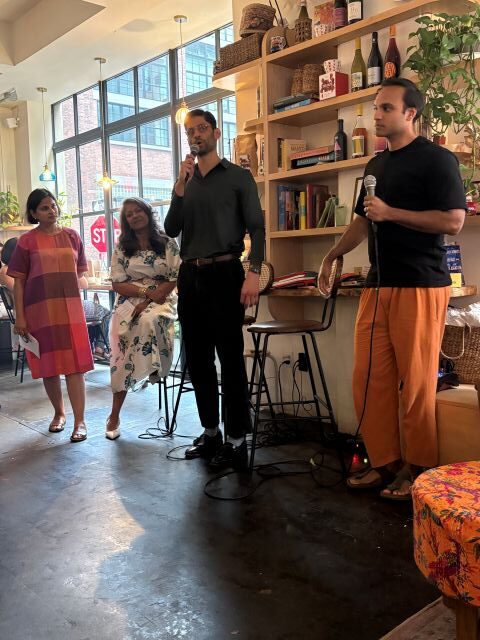
Devjani Dev also raised the question of can you be an outsider to a dominant community and still tell stories?
Radha Vatsal responded, “I think my book is particularly about how the outsider perspective can see stories that the dominant culture doesn’t. So, for me, and I’ve always actually valued this about myself and my identities; being a little bit of an outsider here, I feel helps me to see things differently with a different angle, and I think that makes all of culture much richer as a result.”
If these random thoughts about immigrant women in mainstream literature, the outsider syndrome and breaking into the writing world have piqued your interest, you can sign up for the monthly book discussions, JLF Spotlight Series, in New York. You can attend in person or virtually. Also grab the books of both authors to get a look at how an Indian journalist functioned in 1900’s and now in 2020. No.10 Dover Street by Radha Vatsal and Heartlines by Chandrani Ghosh take you to New York and Washington DC but bring an Indian perspective to both.