Kavery Kaul’s The Bengali is Every Immigrant’s Story
Under Our Sun – Sharing our Stories.
You. Me. They. We immigrants each have a story and the further back we venture into our histories, the more surprising the revelations there are, almost like the layers of an onion.
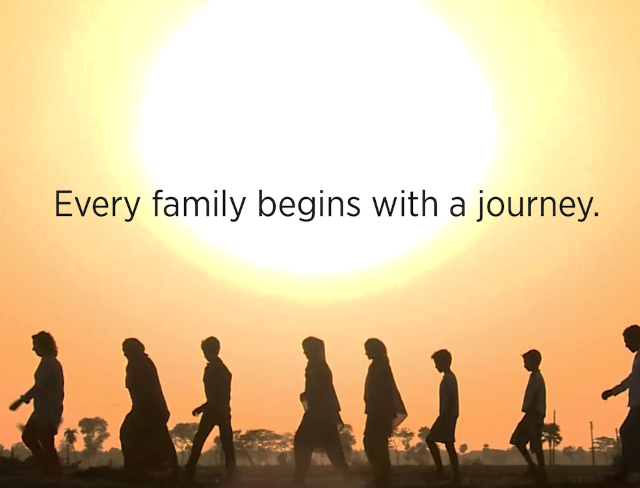
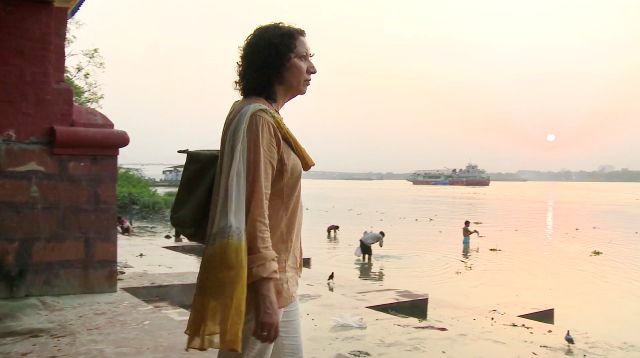
Award-winning documentary filmmaker Kavery Kaul’s latest film is The Bengali, and it keeps you intrigued, glued to your seat, almost as if it were a mystery adventure. We follow Fatima Shaik, an unsmiling African-American writer from America traveling to India on an impossible quest: a journey to find the past of her dead grandfather, Shaik Mohamed Musa, who was Indian and a Muslim. He left home a hundred years ago and so she is searching for something which may no longer exist, something which has vanished with the passing of time.
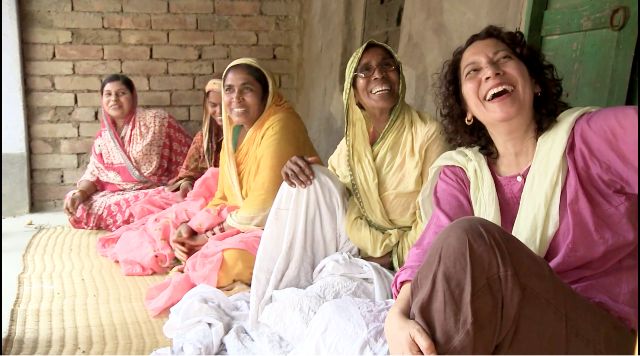
Fatima has an Indian name, but she is from New Orleans, a child of the segregated South. She has lived for four generations in Louisiana and has known no other world. You’d be hard-pressed to say she’s Indian although if you look carefully at her face, there are shadings of an Indian heritage. She is deeply Christian, a committed churchgoer who has never been to a mosque.
Fatima remembers her grandfather’s hookah occupying pride of place and her grandmother’s saree which the grandchildren loved to dress up in – all lost in the churning aftermath of Hurricane Katrina. It as these losses and so many family deaths that probably sent her to India to search for her past.
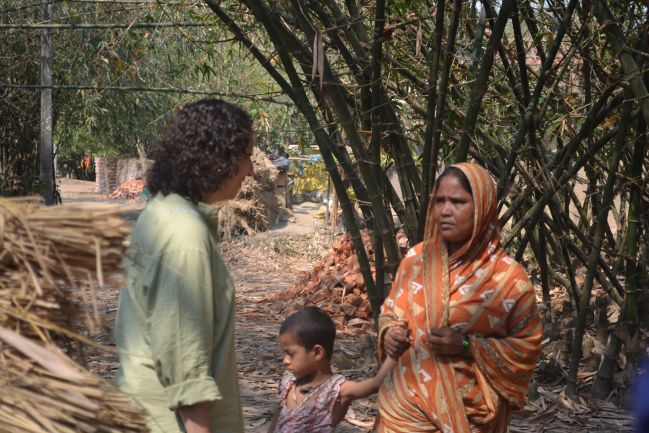
The Bengali is a travelogue of the soul, taking us into squalid, dirt-poor Bengali villages, meeting people we may never know, wandering into their threadbare kitchens and dusty backyards. It is beautifully photographed, shining a candid light on harsh real life. When Fatima meets the villagers of her grandfather’s village – she and they are Bengalis -but worlds apart.
And yet slowly there is conversation, understanding and finally really seeing each other in spite of conflicts and differences. Fatima discovers another world, new family and indeed, herself.
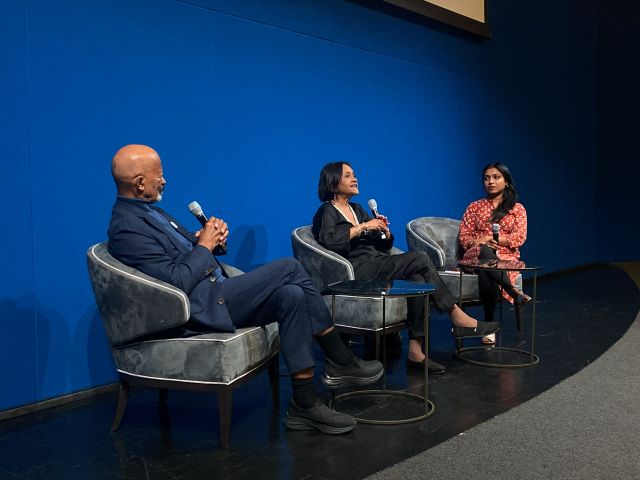
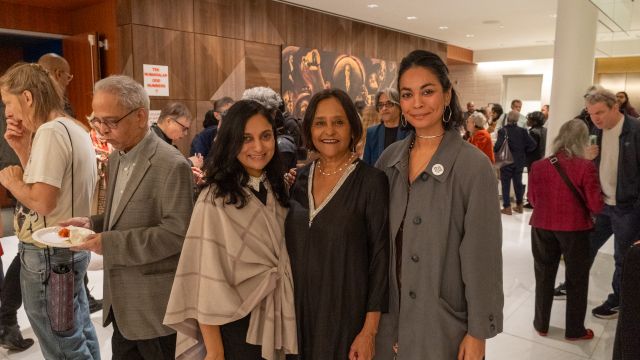
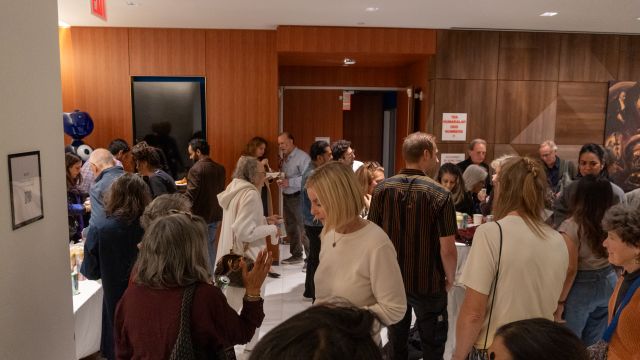
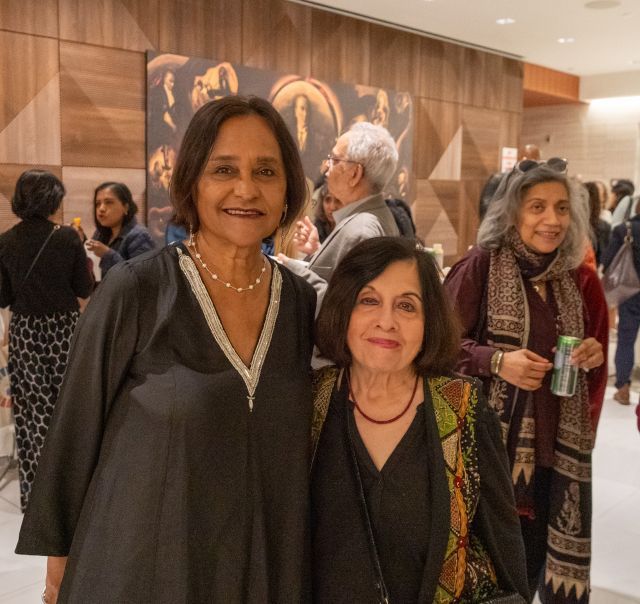
At a screening at Turkish House in New York, audiences got to meet filmmaker Kavery Kaul who had a conversation with Gordon Tapper, President, Give Them a Hand Foundation, Former Section Chief, United Nations. It was moderated by Bedatri D. Choudhury, Arts Editor, Philadelphia Inquirer and Programmer, DOC NYC. As Choudhury noted, “Tonight is really about the stories that connect us, the histories we don’t always know about, and the conversations that bring us closer together.”
https://vimeo.com/1236620546/d3015acff0
Kaul described Fatima’s dilemmas, “Who is she? She’s American. She doesn’t look like them. Doesn’t think like them. Doesn’t act like them. So, what is she doing here, really? She doesn’t even know how to eat with her hands. I mean, these are big differences. That is not just a one-sided unfamiliarity. There’s unfamiliarity in both sides Fatima is a devout Christian. She had never entered a mosque. She knew very little about her Muslim grandfather. In India, in this remote Muslim village, they had never seen a Christian. So, on both sides, there was unfamiliarity, some amount of concern, and what’s important is that they expressed the unfamiliarity and the frustration on both sides, and they found a meeting ground.”
What’s intriguing is that there are many such family histories of immigration buried across America. The Bengali tells the untold story of unions between South Asians and African-Americans in the U.S. In the late nineteenth-century, men from India arrived in the United States and married African-American women in the South or Mexican women in California. Together they created new families and new family trees in America.
In immigration’s long history there are many stories of loss, of division – and also of coming together and seeing the universality of love, human ties and family.
In the discussion after the film, Kaul said, “We can find a meeting ground if we want to. We all have potential, and we have potential to work together, and we also have potential that divides us. What brings us together is our shared humanity.
What really makes the villagers open up to Fatima is those personal moments. What is the spice you use? This is a picture of my children. What about your children? The shared laughter, the shared personal experiences that help us to understand each other. We all like good food. We all have grandmothers that went through something, and if we can focus on that, we will move forward.
And what divides us? Listening to others, listening to people we don’t have to listen to. Focus on ourselves. Focus on the person next to you. Focus on your grandmother. Focus on the food you eat. Tell me about it. You’ll hear about mine and the food I eat, and we’ll get along beautifully.”
After making The Bengali, Kaul actually went back to the village and showed it to the villagers. She recalls, “The place was packed with at least 100 people from nearby villages who’d heard we were doing this. They listened closely, they laughed and were so insightful. One of the women said, ‘some of the people in this film have died, but you know what’s wonderful? We will always remember them now in this film.’ I thought that was so profound and so moving. It meant a lot.”
In conclusion, Kaul observed, “But as we filmmakers all know, that the making of the film is only the beginning of the story. Under Our Sun is an impact campaign inspired by The Bengali. We found that many people who saw the film found a personal connection to the story, outside of the specific story. It brought up their memories, their heritage, their traditions, their sense of belonging, of being told that they don’t belong, and so we created Under Our Sun as a space for everyone to tell their stories, to bring us all together, and now more than ever, we live in a very polarized world, fueled by hostility, violence, and fear. So, in that climate, I am very, very proud to say that many people have joined Under Our Sun. In fact, we have over 1 million views on our social media already. Follow us, post your story, talk to the digital media team that’s here today, and I want to give a special shout out to some people who are here.
They have created the most wonderful stories, personal stories filled with their hearts and minds, and we need to recognize them for that. I think what brings us together is our shared humanity. That’s what Under Our Sun is about.”
Gordon Tapper, who has championed interfaith dialog and understanding, including the annual World Interfaith Harmony Week at United Nations, summed up the impact of The Bengali : “The thing is, none of us can change a country or change a city, but we can change. We can have impact on our immediate community, and if we all have an impact on our immediate community, we will end up impacting on the world.”
(The next screening of The Bengali is The LA screening is at the Wende Museum in Culver City on October 21. Panel after moderated by Lorraine Ali, News and Culture Critic, LA Times.)
Photo Gallery – The Bengali Screening