
Surrender to the Joy of Music with Grammy winner Falu Shah
It is her inborn language from birth and it comes from the heart. She learned the language of Hindustani music in childhood and has introduced it to major international stages from the Grand Ole Opry to the White House to Carnegie Hall.
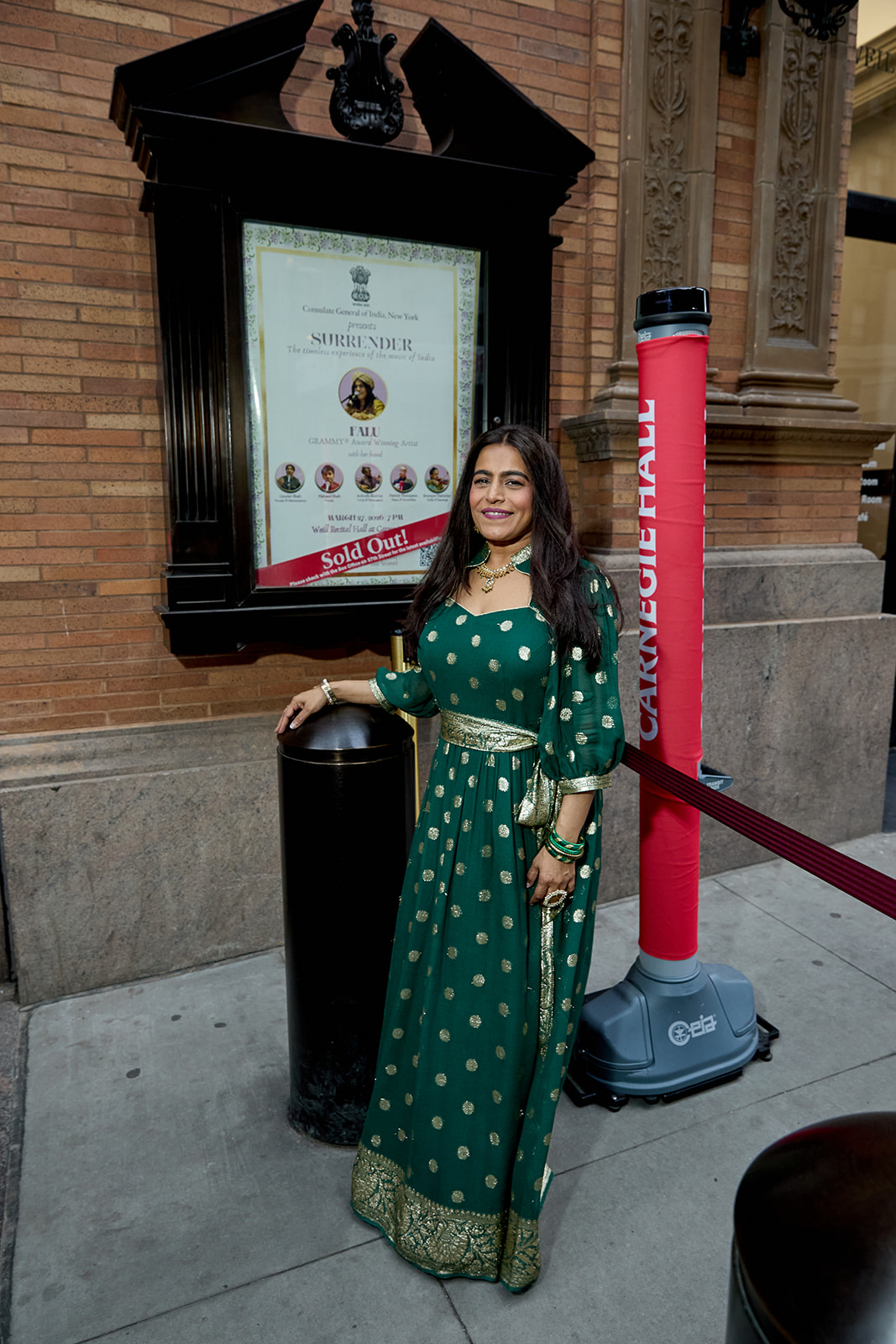
Meet Falguni Shah, known to the world as Falu, who comes from an unbroken lineage of 11 generations of Indian classical musicians. She has won Grammys and has performed with major names like Yo-Yo Ma and Philip Glass. In her newest concert Surrender which premiered at the iconic Carnegie Hall in April, she has something for everyone – the diehard classical music fans, the newbies who are just learning about Indian music and its many avatars from classical ragas to thumris to ghazals to the modern music of pan-Indian cinema.
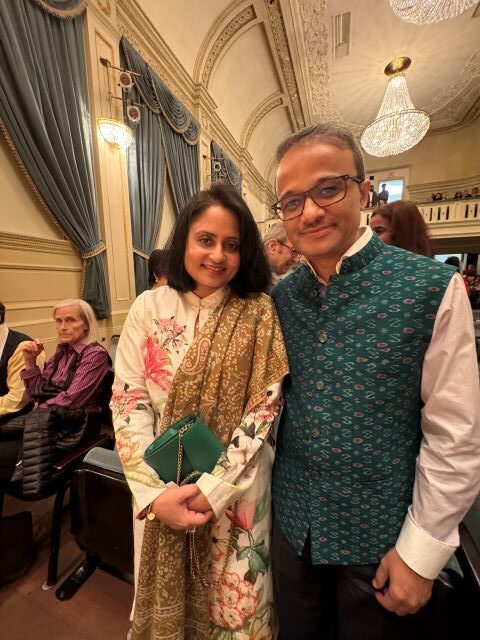
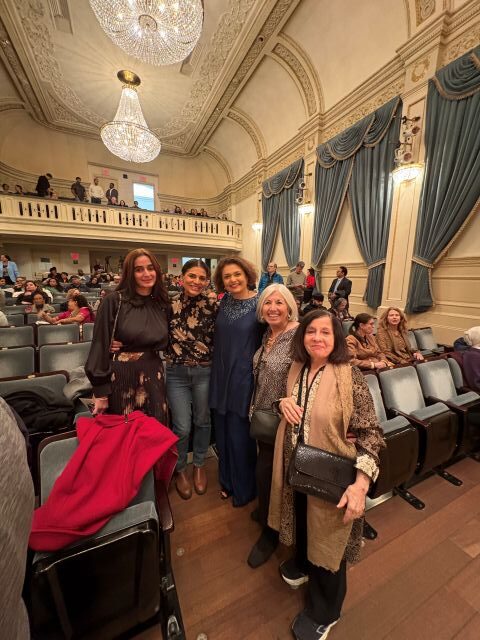
Surrender was sponsored by the Indian Consulate which is the home away from home for so many Indians and the chief guests were CG Binay Pradhan and his wife Mona Lisa. The audience included many New Yorkers from the cultural world and beyond.
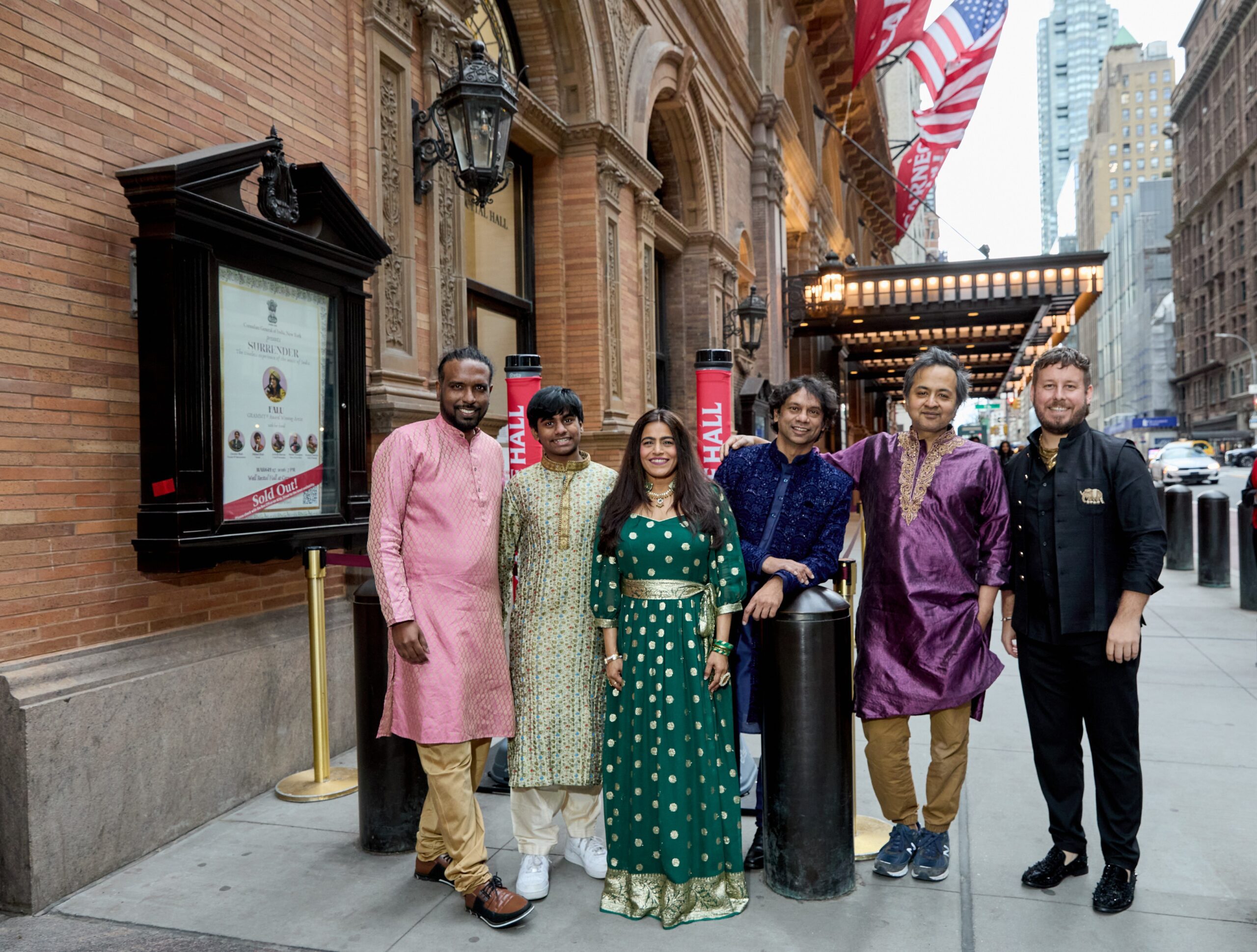
Her versatile band comprises of Gaurav Shah, Avirodh Sharma, Patrick Thompson, Soumya Chatterjee and Nishaad Shah. The newest edition is her own son Nishaad who becomes the 12th generation to carry on the family musical tradition.
Surrender is a delightful soundscape with many instruments from the sarangi to violin, harmonium and accordion, bansuri and tanpura. As Falu shared with the audience, “I also wanted to share that this instrument that I took out today after 27 years is 150 years old. It is a tanpura that has passed on to me from my teacher’s teacher.”
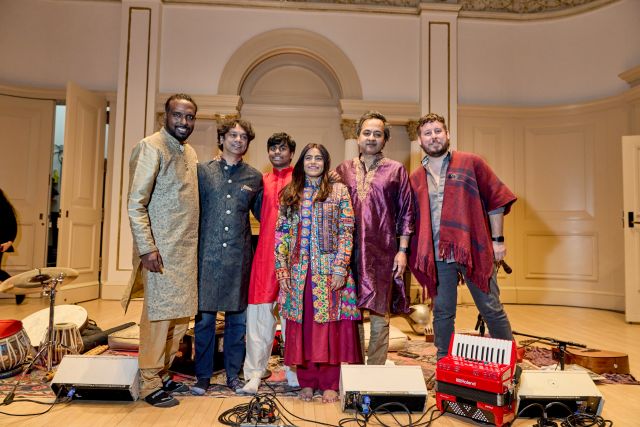
What was truly wonderful was that before each session Falu or her partner and husband, Gaurav Shah, explained in lucid language the story behind the ghazal or the raga, thus making it even more enjoyable to non-Hindi speakers. As Falu explained to the audience, “Ragas are melodic soundscapes that are shaped by subtle movements of notes and microtones. And each raga, each melodic scale, carries with it its own mood, its own time of day, its own feeling. There are ragas for midnight. There are ragas for waking up early. There are ragas for evening romance. There’s a raga for everything. There’s supposed to be 33,000 ragas but most musicians know about a thousand.”
If one wondered where Bollywood and filmi music fit into the kaleidoscope of Indian music, Falu had an explanation, “Merged the last century theater soon after, Indian cinema, this became the heart of popular culture after India’s independence, for a nation that was rebuilding its spirit, this cinema offered joy, imagination, emotional connections. Families were gathered in dark theaters, surrendering to melons that carried both hope and heartbreak of a young nation. Through film, India began to sing together across regions, across generations and across beliefs. Cinema brought music to millions. Many of the melodies in it were inspired by something much older, music of the land itself. This was folk and regional music, shaped not by formal rules, but by rhythms of the daily life.”
As Surrender travels to different cities in the US, there is a chance to catch it and enjoy an evening of calm and happiness. The world may be stressful right now, but in the haven of the concert hall one can get a respite. There is peace and harmony.
Face to Face with Falu Shah
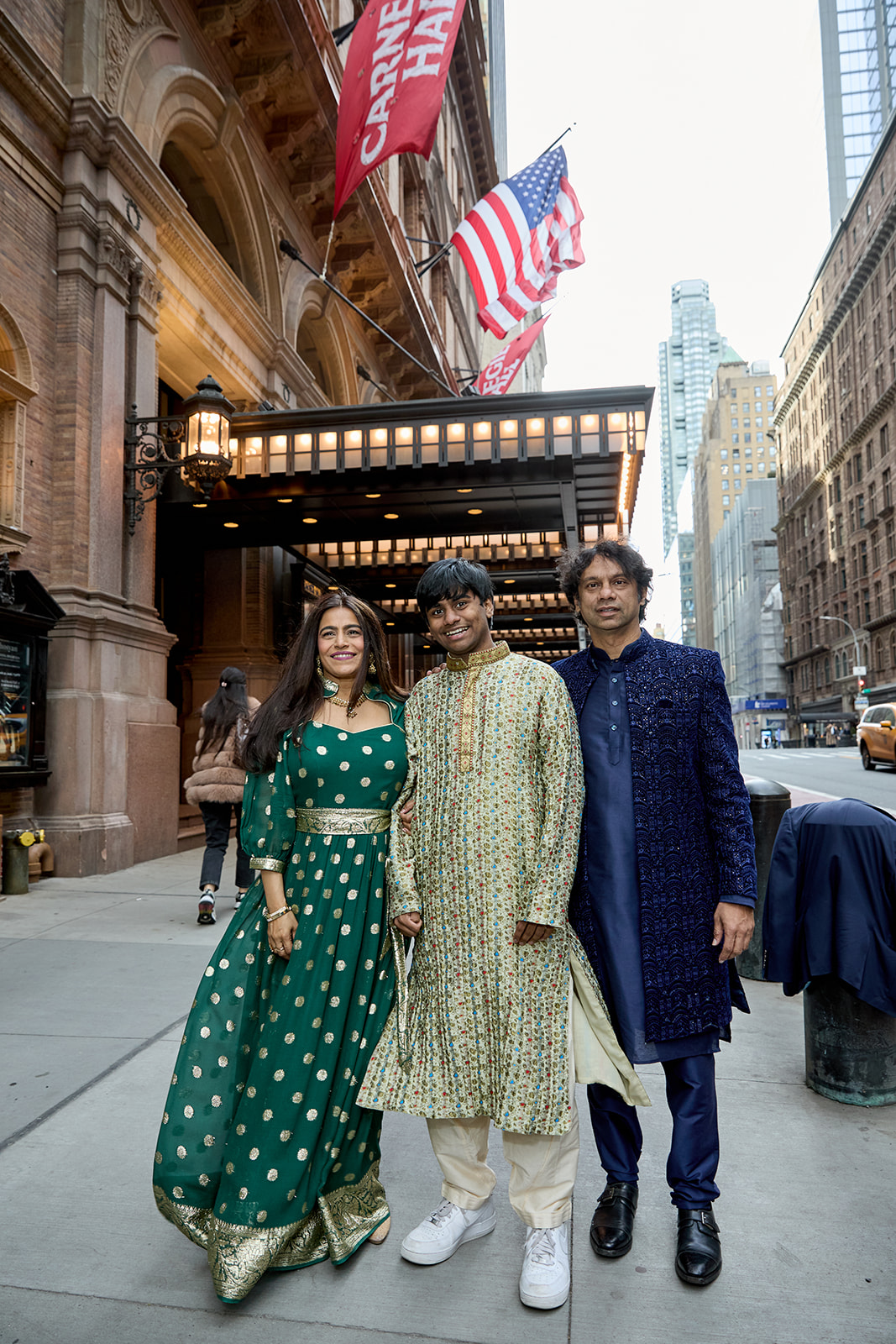
- Singers aspire to perform at the iconic Carnegie Hall. How has your journey been and what is your special connection with the famous space?
Performing at Carnegie Hall is a dream that many singers hold close to their hearts, and I’m no exception. My journey has been one of deep passion, persistence, and a constant desire to grow both musically and spiritually. Carnegie Hall holds a very special place for me; it represents not just artistic excellence, but also a space where stories, cultures, and emotions come alive through music. Each time I step on that stage, I feel an overwhelming sense of gratitude and connection.
- Tell me about Surrender – what do you hope audiences will take away from it?
Surrender is a deeply personal and spiritual offering. At its core, it is about letting go, trusting the journey, and opening oneself to something greater than the self. Through this work, I hope audiences feel a sense of peace, connection, and introspection. If even a few people walk away feeling more centered or uplifted, I feel I have fulfilled its purpose.
At the same time, Surrender is also a musical journey through the evolution of Indian music itself, from its origins in three notes, to seven, then twelve, and ultimately to the rich 22-note melodic system that includes microtones developed over millennia. In this way, the work invites listeners to connect not only spiritually, but also historically and culturally, tracing the depth and beauty of Indian music across centuries.
3. How are you carrying on ancient traditions while living in a very contemporary city like New York?
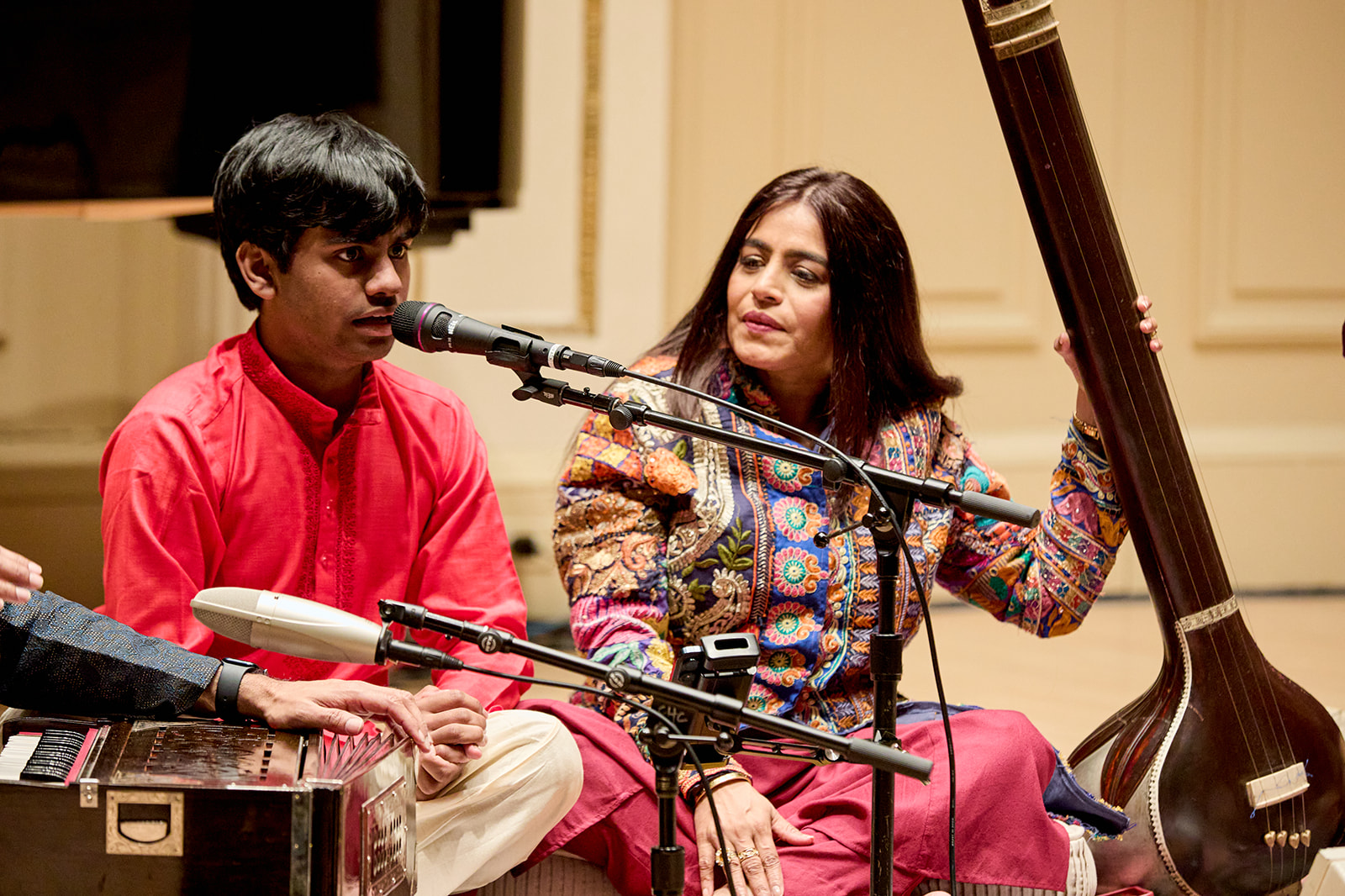
My special guest for this performance is my son, Nishaad, who is 15 years old and currently a sophomore in high school. Having him debut at Carnegie Hall alongside me was an incredibly emotional and fulfilling moment. He represents the 12th generation of our musical lineage, carrying forward a deeply rooted oral tradition passed down through our family for generations.
Witnessing him embrace this heritage with such sincerity, dedication, and depth gives me a profound sense of peace and gratitude. Knowing this music will continue through him, just as it has for the past 11 generations, is truly moving. Sharing the stage with him—sitting side by side as he performed for the first time at Carnegie Hall, was not just a proud moment as a parent, but a deeply spiritual one as an artist. It was, without a doubt, one of the most meaningful experiences of my life.
4. How do you bring the spirit of Surrender into your daily life?
The spirit of surrender is something I try to practice daily, though it is always a work in progress. In both life and art, there are so many moments that call for trust, patience, and acceptance. Surrender, for me, is about embracing uncertainty with grace and allowing creativity and life to flow naturally rather than forcing outcomes.
5.What’s next for you and your band?
Looking ahead, I’m excited to continue creating work that bridges tradition and contemporary expression, and that brings people together through meaningful storytelling. I look forward to touring globally with Surrender and spreading the joy that music gives to audiences worldwide.
