Mayor Mamdani’s Diwali Celebration was the Face of Inclusive New York
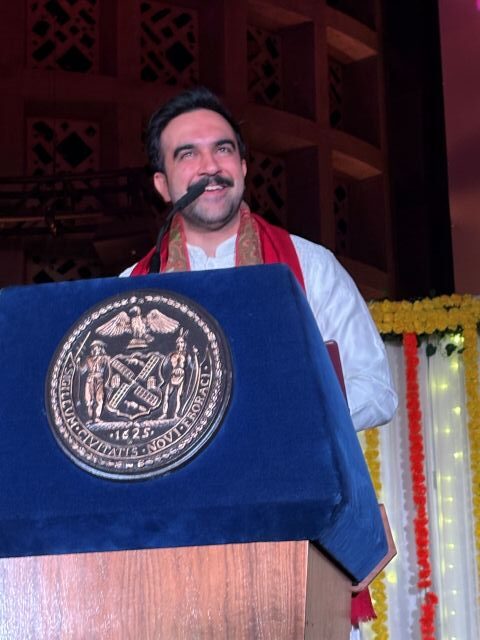
Photo: Lavina Melwani
As someone who has attended Diwali events at Gracie Mansion in past years, I had to say that Mayor Mamdani’s was the most inclusive to date, a collective hug to all New Yorkers.
In the past years, all celebrations have been held at Gracie Mansion, the mayor’s home on the Upper East Side of Manhattan. Mayor Zohran Mamdani’s inaugural Diwali event took the celebration to the working class neighborhood of Corona in Queens which is often the forgotten borough of the city. The event was held at the New York Hall of Science, a magnificent hidden gem which many of us have visited as children or as parents of children. Mamdani introduced the 700 guests to a treasure which many New Yorkers may have not seen. It was founded at the 1964–65 World’s Fair and has evolved into New York’s center for interactive science, serving a half million students, teachers, and families each year.
The President of the New York Hall of Science, Lisa Guggenheim, described it as a Cathedral of Science and said, “ there’s no better place in New York to honor those values as it serves as a gathering place where our neighbors, all of you, come to enjoy one another, learn about the world, how it works, and we learn together to become more engaged and empowered to shape the world and our own lives.”
She added, “Mayor Mamdani, your joyful support of the city’s cultural and educational landscape is especially meaningful to us. This unique and glorious ecosystem of our city, where people from all nations and backgrounds work, play, learn, and nurture our own and each other’s customs and cultures as we’re doing tonight.”
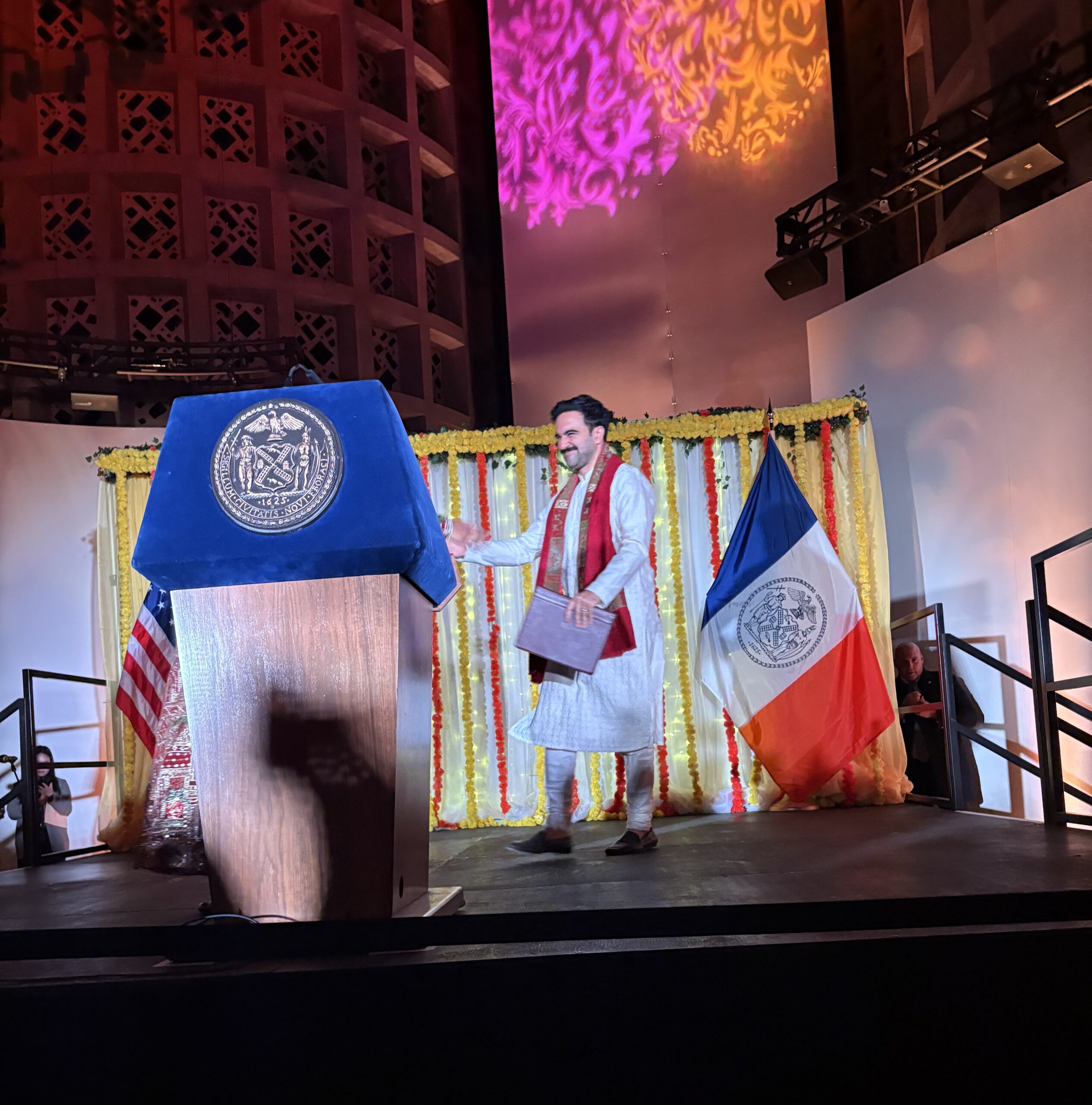
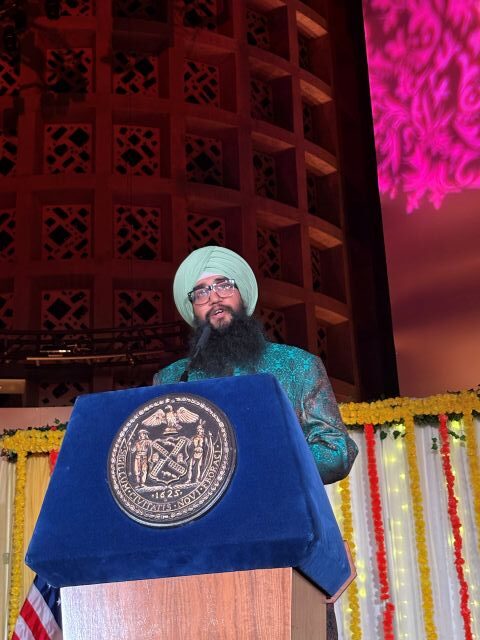
The Grand Hall with its soaring unique architecture reminded me of ancient temple architecture. The guests were such a great mix of the diverse Indian-American community – advocates, artists, writers, workers and dancers as well as businesspeople, the inescapable ‘influencers’ and well-loved New York celebrities.
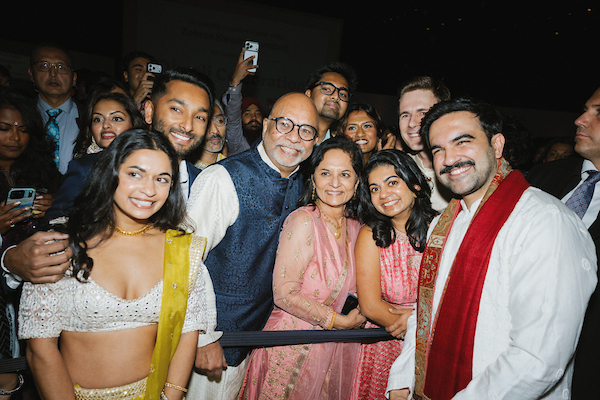
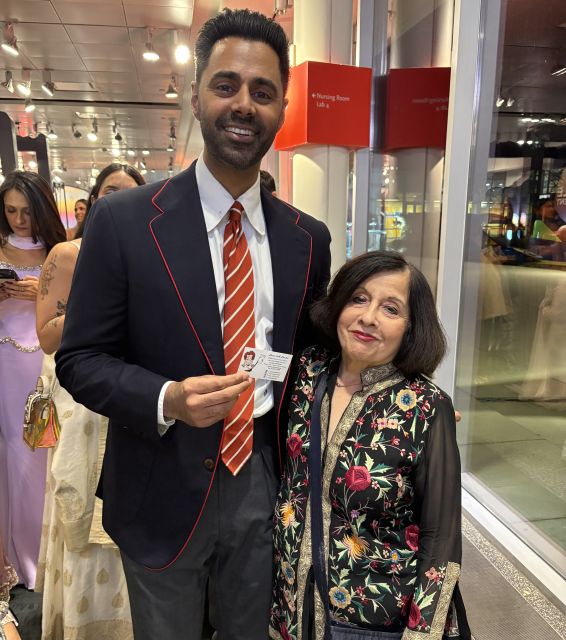
In this egalitarian mishmash you could expect to see anyone – from a turbaned Sikh grandpa to Thiru the well-loved dosa guy with his cart outside NYU or even everyone’s favorite Hasan Minhaj! The noted comedien has a droll sense of humor – he loved my Lassi with Lavina caricature so much he held up my card in the photo we took together as we all waited online for a photo op with Mayor Mamdani!
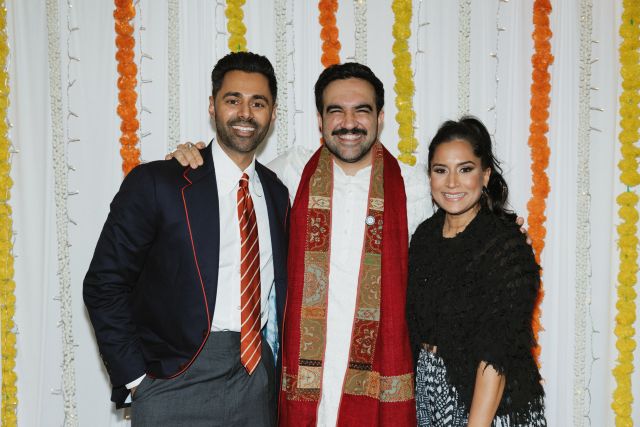
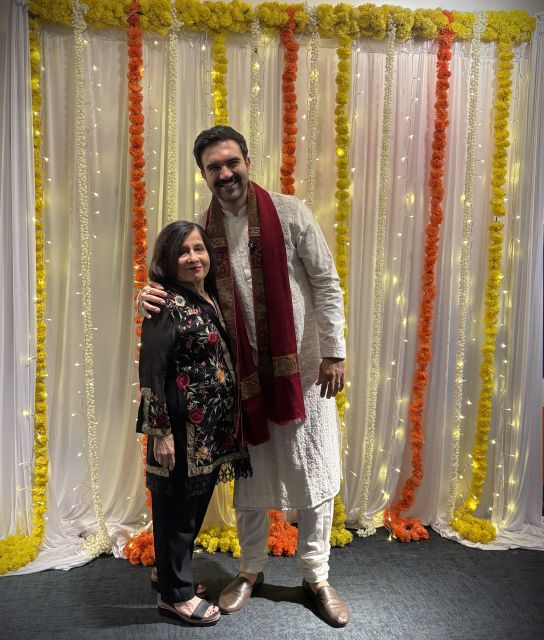
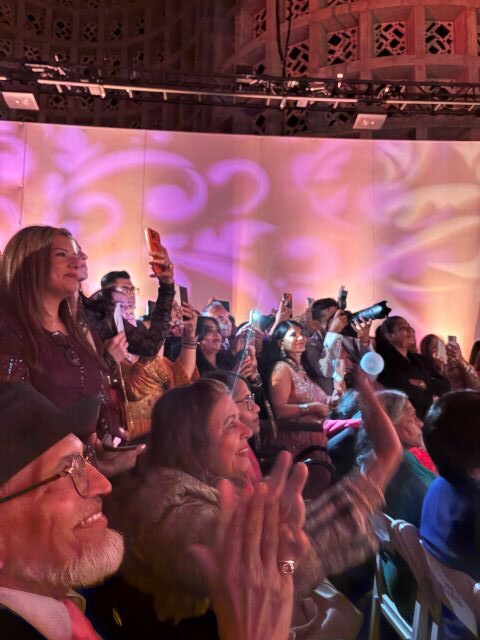
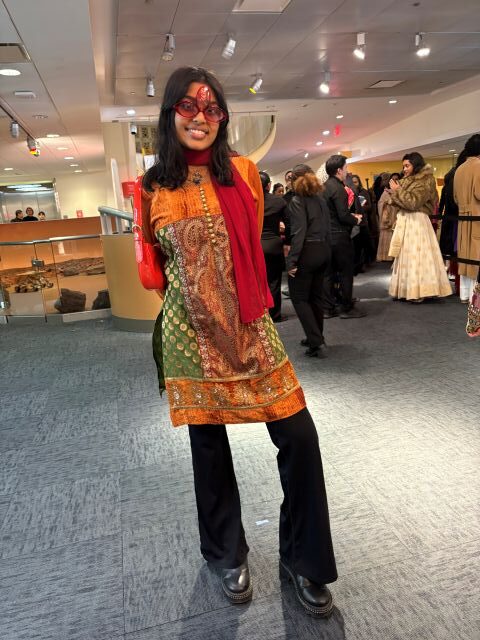
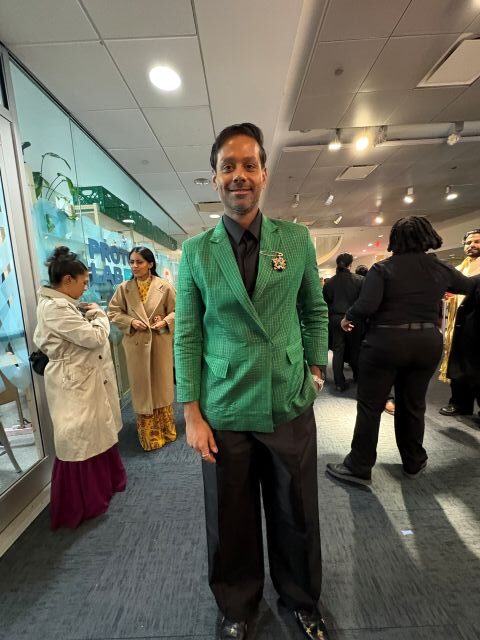
What I was truly impressed by about the guests at the celebration was that whether they were rich and famous, important, or not-so-imporant, ordinary folks – in this great hall, all were equal. No one was a VIP – and yet everyone was a VIP. There were no special seats, no special honorees or citations, no awards handed out to anyone. It was a night for everyone – dressed to the nines in their Diwali best, everyone ate and drank and rocked to the lively music of DJ Omar.
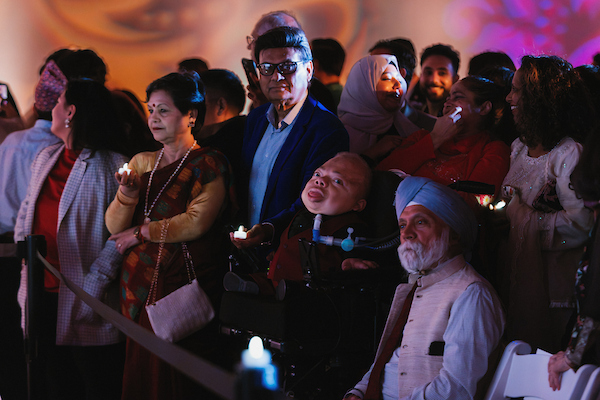
And now I come to the truly impressive part – in a party with no seating there was seating right near the podium, but this was kept for the true VIPS – the elderly and the disabled.
It made me happy to see guests in wheelchairs, the aged and the disabled get their moment in the sun as Mamdani came to the podium – these seated guests had the best seats, the only seats, the ringside seats to the program which included remarks from the Mayor’s team, musicians and a lively dance performance by Payal Kadakia and her vibrant dancers.
Then Mayor Mamdani came to the stage in a white kurta, resplendent with a red shawl and his million-watt smile. This is what a New York Mayor looks like in 2026, and it was obvious that he was really well-loved by all.
Mayor Mamdani: “This is What Home Looks Like.”
“Now, across the five boroughs, most of the Diwali lights last week have now burned out. Most rungolis have been worn away by rain or by broom, and most mithai boxes have been exchanged for the final time. If you have some kaju katli, I will take it!
Diwali’s central symbol, fire, itself is temporary. A lamp’s fire cannot burn in perpetuity. That is why, generation after generation, year after year, we light aur diyas to guide others home. Here in New York City, that sacred practice takes many forms. In Kensington, Bengali families light 14 lamps, one for each generation, to guide the ancestors back. Guyanese and Trinidadian families in Ozone Park in Queens Village light their own lamps for ancestors who crossed the Kala Pani on ships bound for the cane fields of the Caribbean.
In Richmond Hill, Sikh families mark the holiday with Bandi Chor Divas. Nepali families in Jackson Heights celebrate Tihara with tikkas on the foreheads of their brothers and marigolds around the necks of their dogs, while Tamil families on Staten Island rise before dawn for the oil bath. Gujarati families in Bellrose draw Lakshmi’s footsteps in colors of kumkum and haldi off Hillside Avenue, as if the goddess herself had stepped off the Q43!
The South Asian diaspora is a community made of many stories. As the son of a Punjabi Hindu mother and a Gujarati Ugandan Muslim father, I grew up knowing that our shared heritage was never a single language, faith, or affiliation. From an early age, my mother’s family taught me how much beauty and wisdom lives in Hinduism. It is a faith of many gods and even more stories, told one way in Hyderabad and another in Delhi.
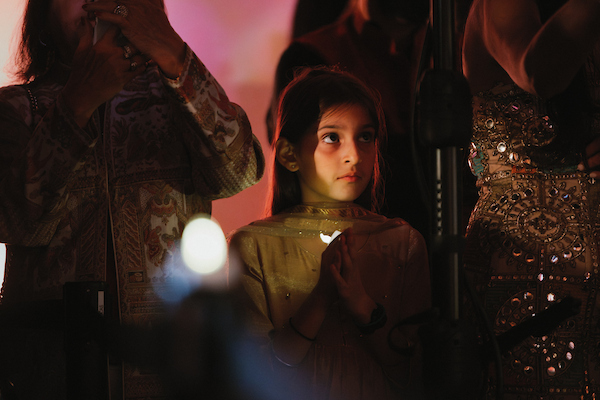
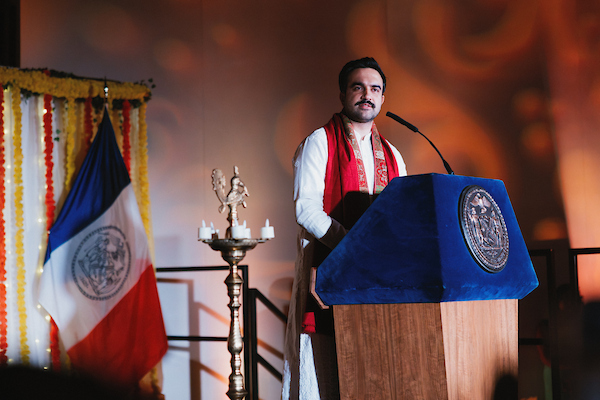
Kara McCurdy. Mayoral Photography Office.
It’s a faith whose oldest scripture teaches us that there are many roads to Satya, and that the same light lives in every one of us, whether we pray in a mandir, a masjid, gurdwara, or nowhere at all.
The Ramayana shows us the brother, the wife, the husband, and the friend that we aspire to be. The Mahabharata shows us what families are really like, where even the bravest heroes and wisest gods stumble, and where one’s dharma must come before one’s loyalty. The wisdom of these stories do not only resonate in the traditions that we pass on to our children, but also in the movements for justice the world over, from Mahatma Gandhi’s Salt March to Dr. King’s March on Washington.
And yet, this Diwali, I’m reminded too of how much work there is still to be done to create a politics of light. This past year alone, we’ve seen our Hindu temples targeted. We’ve seen leaders at the highest levels of our federal government target Sikhs, and we have watched as hate that was once relegated to the margins of society has come to sit at the heart of campaigns for statewide office. Whether it is fearmongering in Washington or Delhi, we hold a shared obligation as we mark this holiday to reject any politics that brings darkness into this world.
And so, to anyone who’s been told to go back home, whose belonging has been questioned, let me say unequivocally: You are home. New York City is your home, and if you ever doubt that, go to Diversity Plaza at 11 p.m. any day of the week, and the light of this city will always be brighter than those who seek to plunge us into darkness.
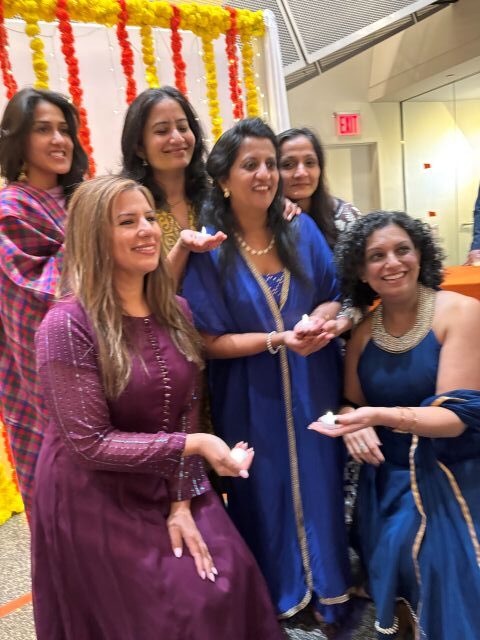
And so, with that, let us light a lamp together in a slightly different format, because in keeping with the laws of the city and the wisdom of the fire department, I ask that we turn on our battery-powered diyas.
This is what home looks like.
Happy Diwali, everyone! It is truly the honor and the privilege of a lifetime to host all of you here and to be here as the first Indian American mayor in the history of our city. As someone who grew up celebrating Diwali with my family, to now be able to celebrate it with our city as the mayor is a gift that I will never grow tired of saying thank you for.”
Mayor Mamdani’s Diwali Celebration – Photo Gallery
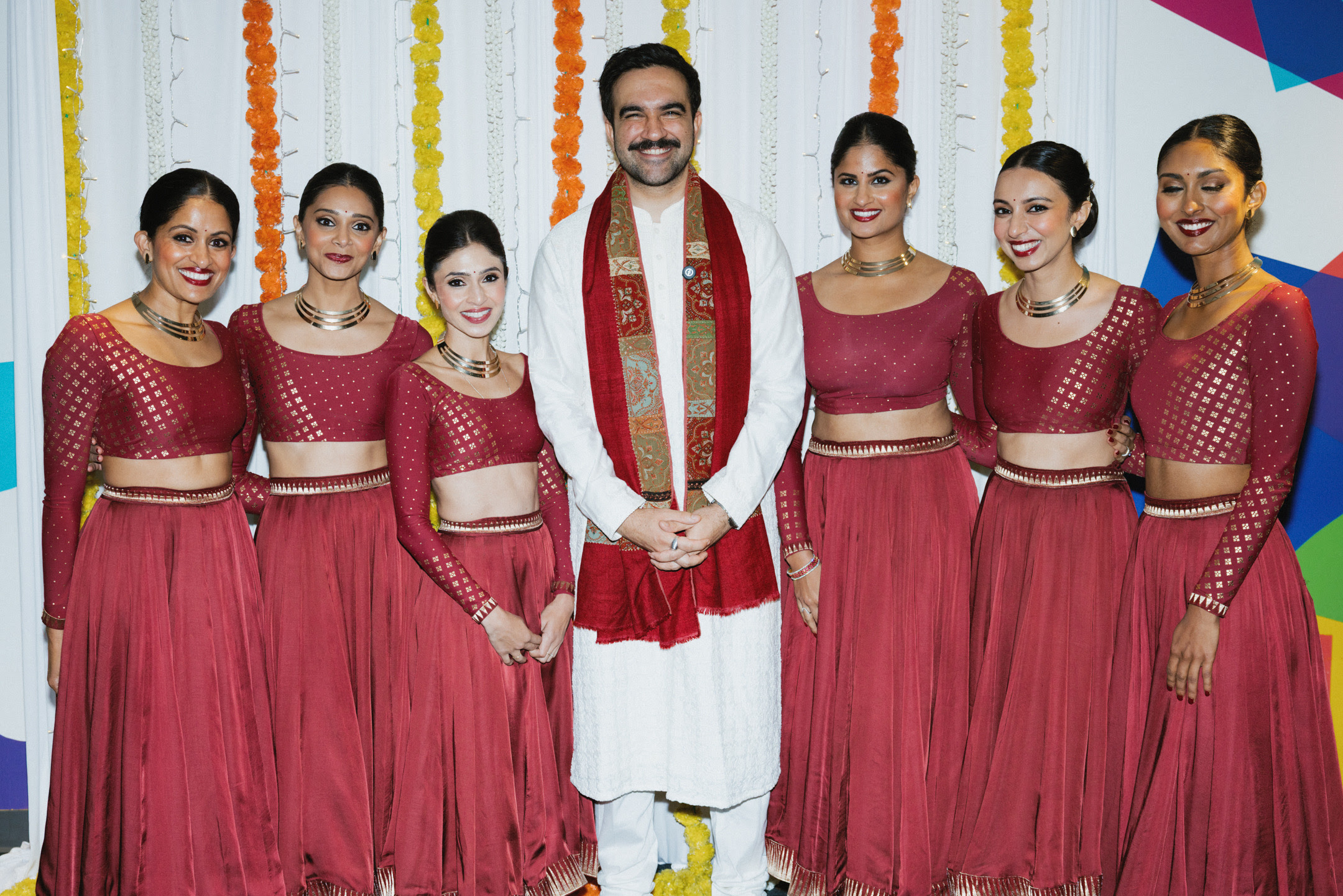
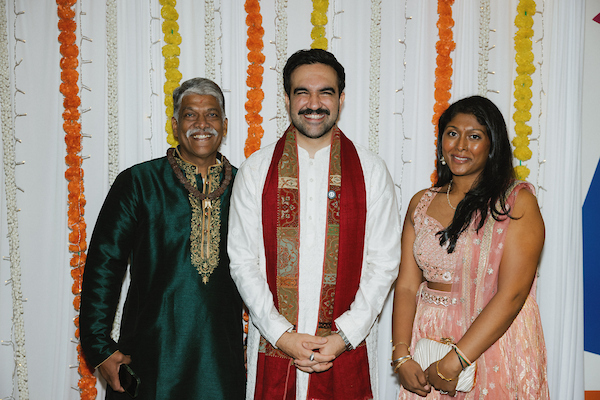
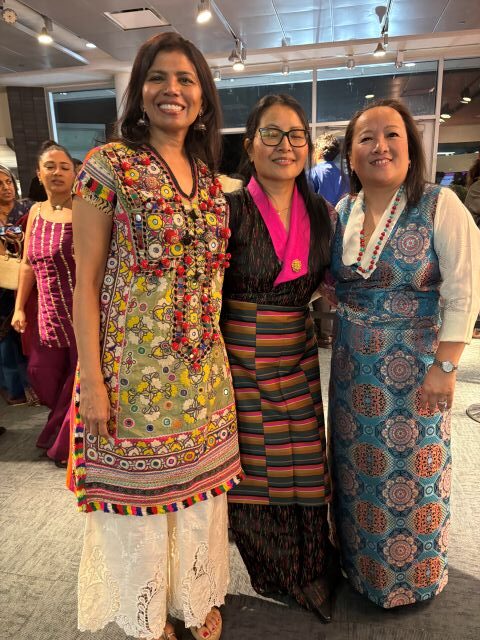
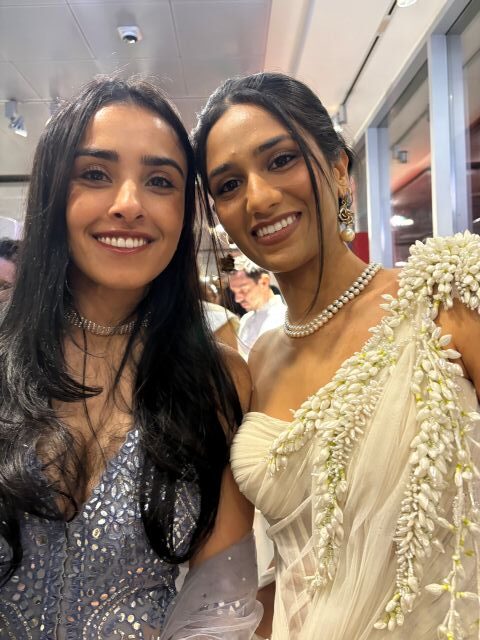
Photo: Lavina Melwani